Mountain Bikes and Road Bikes
Choosing between a mountain bike and a road bike is one of the first questions every cyclist faces. Both machines take you from point A to point B, but they do so in very different ways. A mountain bike is built to absorb rocks, roots and mud, while a road bike is designed to turn your pedaling effort into speed on smooth pavement. Understanding what separates them will help you invest in a bike you actually enjoy riding.
This page walks you through the main differences, the strengths of each style, and the practical questions to ask yourself before buying. Whether you picture yourself on forest trails or on long weekend rides along quiet country roads, you will find clear guidance here.
What Is a Mountain Bike?
A mountain bike, often abbreviated as MTB, is designed for off-road riding. It features a sturdy frame, wide tires with aggressive tread, and usually front suspension or full suspension to soak up impacts. The riding position is upright and relaxed, which gives you good control over technical terrain and helps you react quickly to obstacles.
Modern mountain bikes come in several flavors. Trail bikes are the all-rounders most riders start with. Cross-country bikes are lighter and built for speed and climbing. Enduro and downhill bikes prioritize durability and descents, at the cost of weight and pedaling efficiency.
- Wide, knobby tires for grip on dirt, gravel and mud
- Suspension fork (or full suspension) to absorb bumps
- Lower gearing suited to steep climbs
- Powerful brakes, usually hydraulic disc brakes
- Flat, wide handlebars for precise steering
What Is a Road Bike?
A road bike is built for speed and efficiency on paved surfaces. It has a lighter frame, narrow smooth tires, and dropped handlebars that let you adopt an aerodynamic position. The geometry stretches you forward, which reduces wind resistance and puts your power directly into the pedals.
Road bikes also come in variations. Endurance road bikes offer a slightly more upright position and more comfort for long rides, while performance-oriented models favor aggressive geometry and responsiveness. Gravel bikes sit somewhere in between, blending road efficiency with the ability to handle unpaved paths.
- Lightweight frame and narrow tires for speed on pavement
- Drop handlebars with multiple hand positions
- Higher gearing for fast riding on flat and rolling roads
- Responsive, nimble handling
- Less forgiving on potholes and rough surfaces
Mountain Bike vs Road Bike: The Key Differences
The simplest way to compare the two is to look at where each one excels. Neither is better in absolute terms; they are simply tools shaped by different purposes. Think of it like footwear: hiking boots and running shoes both go on your feet, but you would not climb a muddy trail in racing flats.
<table is not needed here; the essentials are:
- Tires: MTBs use wide, treaded tires (typically 2.1 to 2.6 inches); road bikes use narrow, smooth tires (typically 25 to 32 mm).
- Suspension: mountain bikes absorb shocks; road bikes rely on frame compliance and tire pressure for comfort.
- Riding position: upright and stable on an MTB, stretched and aerodynamic on a road bike.
- Weight: road bikes are generally several pounds lighter.
- Speed: on pavement, a road bike is noticeably faster for the same effort.
- Comfort on rough terrain: the mountain bike wins by a wide margin.
Imagine two riders leaving the same trailhead. One takes the gravel fire road climbing into the hills: the mountain bike rider rolls over rocks and ruts without a second thought. The other stays on the paved valley road and covers three times the distance in the same time. Same effort, very different experiences, and that is exactly the point.
Which Bike Should You Choose?
The right answer depends less on the bike and more on where you will actually ride. Be honest with yourself about your local terrain and your habits, not the rides you dream about.
- List the routes available near your home: paved roads, bike paths, trails, fire roads.
- Estimate what percentage of your riding would be off-road versus on pavement.
- Consider your goals: fitness, commuting, adventure, racing or simply fun.
- Set a realistic budget including a helmet, lock and basic accessories.
- Test ride both types if possible; comfort in the first minutes matters a lot.
As a rule of thumb, if more than half of your riding happens on dirt, choose a mountain bike. If you mostly ride paved roads and value speed and distance, choose a road bike. If you genuinely split your time between both worlds, a gravel bike or a lightweight hardtail can cover a surprisingly wide range of terrain.
The Case for a Mountain Bike
Choose an MTB if you live near trails, want a forgiving and stable ride, or value durability over speed. Mountain bikes also handle city potholes, curbs and cobblestones without flinching, which makes them popular with urban riders who refuse to let bad pavement dictate their route.
The Case for a Road Bike
Choose a road bike if your rides are mostly on asphalt, if you enjoy covering long distances, or if fitness and speed are your main motivations. The efficiency gain is real: with the same effort, a road bike simply goes farther and faster, which makes every ride feel rewarding.
Understanding Gears, Brakes and Tires
A few technical concepts explain most of the practical difference between the two categories, and they are simpler than they look.
Gearing: mountain bikes favor low gears so you can spin up steep, loose climbs without stalling. Road bikes favor higher gears so you can keep accelerating at speed. Neither is superior; each matches its terrain.
Brakes: disc brakes are now standard on mountain bikes and increasingly common on road bikes. They offer consistent stopping power in rain and mud, which is reassuring for beginners.
Tires: tire choice shapes the entire character of a bike. Wide tires at low pressure grip and cushion; narrow tires at higher pressure roll fast and feel lively. You can adjust pressure within limits to tune comfort and grip, one of the cheapest upgrades available to any cyclist.
Comfort, Fit and Safety Basics
Whatever style you pick, proper fit matters more than any component. A bike that is too big or too small will be uncomfortable no matter how good it is on paper.
- Match frame size to your height and inseam; ask for help at a local shop if unsure.
- Adjust saddle height so your leg is almost straight at the bottom of the pedal stroke.
- Always wear a helmet; it is the single most effective piece of safety equipment.
- Carry a spare tube, tire levers and a mini pump on every ride.
- Start with shorter rides and build distance gradually.
A quick word on maintenance: both categories appreciate basic care. Wipe the drivetrain, check tire pressure before each ride, and have the brakes inspected regularly. A well-maintained bike is safer, faster and far more pleasant to ride.
Budget Considerations and First Upgrades
Entry-level bikes in both categories are genuinely good nowadays. It is wiser to buy a solid mid-range bike with reliable components than a top-tier model stretched beyond your budget. As a rough framework, plan for the bike itself, then a small reserve for essentials such as pedals, lights and gloves.
When upgrade time comes, priorities differ by category. On a mountain bike, better tires and a smoother suspension tune transform the ride. On a road bike, a professional bike fitting and quality tires deliver the biggest gains in comfort and speed. In both cases, resist the urge to chase marginal gains before you have simply ridden enough to know what you need.
Frequently Asked Questions
Can I ride a mountain bike on the road?
Yes, and many people do. You will be slower and the ride will feel heavier, but an MTB on pavement is perfectly fine, especially if you fit smoother tires. Swap to road-oriented tires if your routes become mostly paved.
Can I take a road bike on gravel trails?
Light, well-packed gravel paths are usually manageable with care, but technical trails are not. Tires are too narrow and the frame has no clearance or suspension for rocks and roots. A gravel bike is the better compromise for mixed surfaces.
Which is better for a complete beginner?
If your surroundings include trails and rough paths, start with a mountain bike: it is stable, forgiving and confidence-inspiring. If you live in a flat, paved area and want to build fitness, a road or endurance bike will keep you motivated with visible progress.
Ride More, Worry Less
Mountain bikes and road bikes are not rivals; they are answers to different questions. The best bike is the one that matches the terrain outside your door and the kind of riding that makes you want to go back out. Start with where you will ride, set an honest budget, prioritize fit and comfort, and let the miles teach you the rest. The cycling world is wide enough for both styles, and many riders eventually own one of each.
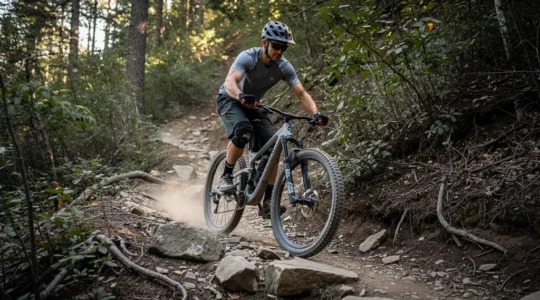
Which Full-Suspension Setup Works Best for 150 mm Travel Without Pedal Bob
A 150 mm full-suspension mountain bike can climb efficiently and remain composed through rocky descents, but travel alone cannot deliver that balance. Rear suspension kinematics, shock sag, rebound damping, tyre construction and pedalling technique all influence how much energy the…
Lire la suite