Tips for Cyclists
Cycling is one of the most rewarding activities you can take up, whether you ride for fitness, commuting, or the simple pleasure of being outdoors. Yet many new riders feel overwhelmed by the amount of advice available: what bike to choose, how to stay safe on busy roads, how often to service a chain, or how far to ride before taking a break. This pillar page brings together the essential tips for cyclists in one place, organized around the questions riders actually ask, so you can build confidence from your very first ride.
The good news is that cycling rewards consistency more than talent. A rider who follows a few simple habits—proper position, regular maintenance, sensible pacing—will improve faster and enjoy the sport far more than someone who buys expensive gear and skips the fundamentals.
Getting Started: Setting Yourself Up for Success
Before worrying about speed or distance, make sure the basics are right. The single biggest mistake beginner cyclists make is riding a bike that does not fit. A frame that is too large or too small causes knee pain, numb hands, and back discomfort, and it makes handling unpredictable.
Get the Right Bike Fit
A proper fit does not require a professional studio visit, although one is worth it if you ride regularly. Start with these checkpoints:
- Saddle height: with your heel on the pedal at the bottom of the stroke, your leg should be almost fully extended; when clipped in properly, a slight knee bend remains.
- Saddle position: level, with the nose neither tilted up nor down.
- Reach: a comfortable, slightly bent elbow when your hands rest on the handlebars—no locked arms, no hunched shoulders.
- Tire pressure: check the sidewall of your tires for the recommended range and inflate before every ride.
Think of bike fit like adjusting a car seat: you could technically drive without doing it, but everything becomes harder and less safe.
Choose the Right Bike for Your Riding
The best bike is the one that matches where you actually ride, not the one that looks fastest in a shop. A quick comparison:
- Road bikes suit smooth pavement, longer rides, and riders focused on fitness or speed.
- Hybrid bikes handle a mix of streets, bike paths, and light gravel—ideal for commuting and casual weekend rides.
- Mountain bikes are built for trails and rough terrain; they are heavier on pavement but far more capable off-road.
- Electric bikes extend your range and make hills and headwinds manageable, which is why they have become popular among commuters and returning riders.
Safety First: Habits That Protect Every Ride
Safety is not about fear; it is about predictable habits that keep you visible and in control. Most avoidable accidents involve one of three factors: poor visibility, unexpected road conditions, or riding outside the rules of the road.
Be Seen, Be Predictable
Drivers react to what they expect. Predictable riding is your strongest safety tool:
- Use front and rear lights in low light, dusk, and rain—even during the day, lights increase visibility.
- Ride with traffic, in a straight line, and avoid weaving between parked cars.
- Signal turns clearly and make eye contact at intersections whenever possible.
- Wear bright or reflective clothing; a well-fitted helmet is non-negotiable.
Read the Road Ahead
Experienced cyclists scan 20 to 30 feet ahead, watching for hazards such as gravel at corners, painted road markings that become slick when wet, drain grates, and car doors opening. A useful habit is to verbalize hazards silently— »grate, » « door zone, » « sand »—until scanning becomes automatic. Slow down before corners rather than braking hard mid-turn, especially on descents or wet surfaces.
Know the Rules That Apply to You
In most English-speaking countries, bicycles are legally considered vehicles, which means you must obey traffic signals, stop signs, and right-of-way rules just as drivers do. Regulations vary by region—helmet requirements, sidewalk riding, and minimum passing distances all differ—so check what applies locally. Riding legally is not only safer; it also builds goodwill between cyclists and drivers.
Essential Maintenance Every Cyclist Should Master
You do not need to become a mechanic, but a handful of basic skills will save you money, prevent roadside frustration, and extend the life of your bike. A drivetrain that is clean and lubricated runs more efficiently and lasts significantly longer than one left to grind through dirt.
The Pre-Ride Check
Before each ride, run through this quick checklist—it takes less than two minutes:
- Squeeze both brakes and confirm they stop the bike firmly.
- Check tire pressure and look for cuts, bulges, or embedded debris.
- Lift the front wheel, spin it, and listen for rubbing or clicking.
- Test both quick releases or thru-axles to confirm wheels are secure.
Four Skills Worth Learning
- Fixing a flat tire: carry a spare tube, tire levers, and a mini pump or CO2 inflator. Practice at home so the first roadside repair is not a struggle.
- Lubricating the chain: apply lube to a clean chain, wipe off the excess, and repeat every few hundred miles or after wet rides.
- Adjusting brakes and gears: barrel adjusters solve most minor shifting issues without tools.
- Cleaning the drivetrain: a rag, degreaser, and five minutes after dirty rides prevent premature wear.
Consider a professional service once or twice a year if you ride regularly—worn chains, brake pads, and cables are inexpensive to replace and prevent bigger problems.
Riding Technique: Pedal Smoother, Climb Stronger
Efficient cycling is about rhythm, not raw power. Beginners often push big gears at low cadence, which fatigues the muscles quickly and strains the knees.
Cadence and Gearing
Aim for a pedaling rhythm of roughly 70 to 90 revolutions per minute on flat terrain. Spin a lighter gear rather than grinding a heavy one; your heart and lungs adapt faster than your muscles, and this is exactly what you want on longer rides. Shift before a climb or stop, not halfway up when the chain is under maximum load.
Climbing and Descending
- On climbs, stay seated for long gradients, keep your upper body relaxed, and shift early to maintain steady rhythm.
- On descents, lower your chest slightly, keep your hands on the drops or grips, and brake before the corner—never in it.
- Look where you want to go, not at the obstacle you want to avoid; the bike follows your eyes.
Group Riding Basics
Riding with others is one of cycling’s great pleasures, but it follows etiquette. Hold a steady line, avoid overlapping wheels with the rider ahead, communicate hazards verbally and with hand signals, and rotate through pace lines smoothly rather than surging. If you are new to groups, tell the others—most riders are happy to help a newcomer learn the ropes.
Fueling and Recovery: Ride Longer, Feel Better
On rides longer than an hour, nutrition matters. Your muscles store limited glycogen, and running empty—what cyclists call « bonking »—turns a pleasant ride into a slog.
- Hydrate regularly; sip every 10 to 15 minutes rather than waiting until you feel thirsty.
- On rides over 90 minutes, take in carbohydrates: a banana, energy bar, or sports drink works well.
- Eat a mix of carbohydrates and protein within an hour after hard rides to support recovery.
Recovery is when fitness actually improves. Alternate harder days with easy spins or rest, prioritize sleep, and treat soreness that persists for days as a signal to ease off rather than push through.
Building Consistency: From Occasional Rides to a Real Habit
The riders who improve most are not the ones who crush one heroic weekend ride; they are the ones who ride regularly. A practical approach for beginners and intermediates:
- Start with three rides per week of 30 to 60 minutes at a conversational pace.
- Add roughly 10 percent to your total weekly distance as comfort grows.
- Include one slightly harder session—hills, intervals, or a faster group ride—once you have a solid base.
- Set process goals (« ride three times this week ») rather than outcome goals alone.
Consider a fictional example: Alex, a commuter who starts riding twice a week, focuses on tire pressure, chain care, and steady cadence. Within a few months, Alex comfortably completes a metric century (62 miles)—not because of talent, but because the fundamentals were in place from the start. That is the real power of good cycling tips applied consistently.
Continue Exploring This Category
This page gives you the framework; the articles in this category go deeper into each topic, from detailed bike fit adjustments and flat tire repair walkthroughs to nutrition planning, route selection, and seasonal riding gear. Browse the guides below and build your skills one ride at a time.

How to Ride Singletrack at a Steady Pace Without Surprise Stops Every 2 Minutes
You’re riding along a narrow forest trail, feeling comfortable, when a cluster of roots appears. You grab the brakes, nearly stop, wobble through, then pedal hard to recover. Thirty seconds later, another obstacle catches you by surprise. Meanwhile, you can…
Lire la suite
How Long Should Post-Ride Foam Rolling Take to Help Recovery Without Bruising You
After a long ride, tight quadriceps, heavy calves and stiff hips can make sitting down feel easier than getting back up. A foam roller may offer some relief, but spending twenty painful minutes grinding through every muscle is not necessarily…
Lire la suite
How to Gain 1–2 km/h Average Speed With Aerodynamics Without Buying Deep Wheels
Want to ride faster without training more hours or buying expensive deep-section wheels? Start with the resistance your body and bike already create. A sustainable riding position, close-fitting clothing and well-matched tyres can reduce the effort needed to maintain speed….
Lire la suite
How to Build Endurance for 100 km Rides With Only 3 Workouts a Week
Building enough endurance for a 100 km ride does not require cycling every day. For time-constrained riders, three well-planned weekly sessions can provide a practical framework: one long endurance ride, one focused tempo session, and one shorter ride dedicated to…
Lire la suite
How to Read an Elevation Profile to Avoid the “Double-Climb” Trap on Long Routes
An elevation profile can show 1,500 metres of climbing and still conceal the difference between a manageable ride and a day that leaves you exhausted, behind schedule and facing another major ascent. The problem is not simply how much climbing…
Lire la suite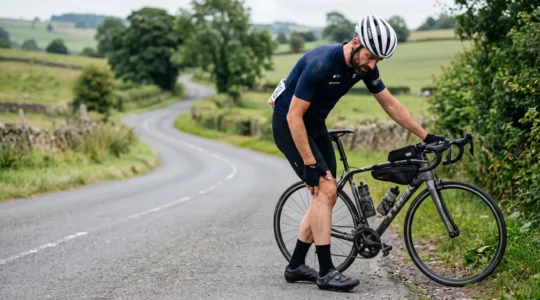
Why Do Overuse Injuries Sneak Up After You “Finally Get Consistent” on the Bike ?
You finally have a cycling routine. Your legs feel stronger, the same hills seem easier, and riding several times a week no longer leaves you exhausted. Then an unfamiliar ache appears around your knee, Achilles tendon or lower back. Nothing…
Lire la suite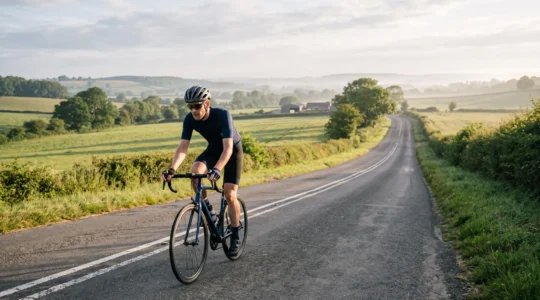
How to Increase Weekly Cycling Mileage by 20% Without Feeling Wrecked by Week 3
Increasing weekly cycling mileage by 20% is not simply a matter of riding 20% farther. The challenge is accumulating additional endurance training without letting fatigue undermine your next session, your working week, or your motivation to ride. A sustainable approach…
Lire la suite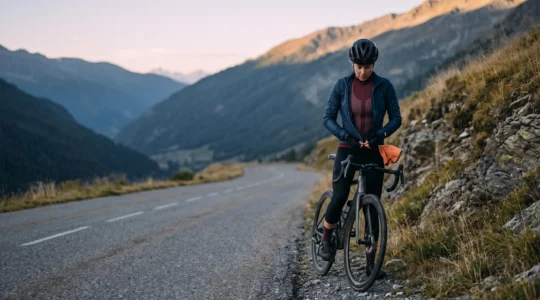
How to Layer for a 5°C Morning Ride That Warms to 15°C Without a Bulky Bag
A ride that begins at 5°C and finishes at 15°C presents a clothing problem that a winter jacket alone cannot solve. You need enough protection for cold morning air and fast descents, but not so much insulation that the first…
Lire la suite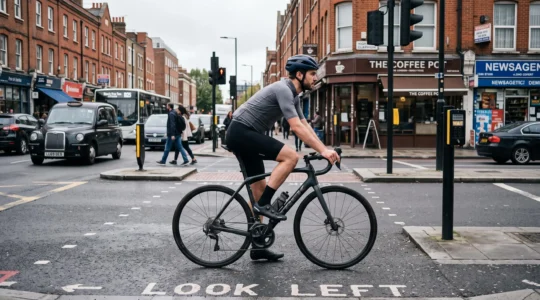
How to Switch to Clipless Pedals Without Falling Over in the First 7 Stops
The hardest part of switching to clipless pedals is rarely pedaling. It is remembering that your foot is attached to the bicycle when you slow down, reach a traffic light, or suddenly need to stop. Clipless pedals connect a cycling…
Lire la suite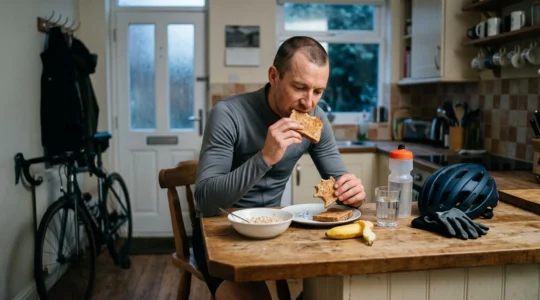
What Should You Eat 60–120 Minutes Before a Ride to Avoid Mid-Ride Hunger
The best pre-ride meal is one that supplies enough carbohydrate to support your effort without leaving your stomach feeling heavy. If you have 60–120 minutes before cycling, a practical starting point is a carbohydrate-rich snack or light meal, such as…
Lire la suite