Cycling Tourism and Bike Travel
Cycling tourism has quietly become one of the most rewarding ways to travel. Instead of rushing past landscapes through a car window, you experience them at a pace where every hill, village, and viewpoint becomes part of the journey. Whether you dream of pedaling along the Pacific Coast Highway, crossing the Blue Ridge Mountains, or exploring the farm roads of Vermont, bike travel offers a rare combination of adventure, exercise, and genuine connection with the places you pass through.
This page brings together the essential knowledge you need to start planning your own cycling adventure, from choosing the right style of trip to preparing your body, your bike, and your itinerary.
What Is Cycling Tourism?
Cycling tourism covers any travel experience where the bicycle is the main way of moving around or exploring. It ranges from a weekend of winery rides in Napa Valley to a cross-country journey on the Adventure Cycling Association routes. The common thread is that riding is not just a pastime during the trip — it is the trip.
It helps to think of cycling tourism as a spectrum. On one end sits destination cycling, where you stay in one place and take daily rides from your hotel. On the other end sits long-distance touring, where you move from town to town over days or weeks. Most trips fall somewhere in between, and understanding where your ideal ride sits on that spectrum is the first step in planning well.
Main Styles of Bike Travel
- Day rides and hub-and-spoke touring: you base yourself in one town and ride loop routes each day. Ideal for beginners and families.
- Inn-to-inn touring: you ride between towns each day, sleeping in hotels or bed-and-breakfasts, carrying little more than daily essentials.
- Self-supported bikepacking: you carry camping gear on your bike and follow mixed terrain, from gravel roads to singletrack.
- Guided and supported tours: an operator handles routes, luggage transfers, and mechanics, so you simply ride.
- Bike commuting tourism: using public bike-share systems or rented bikes to explore cities like Washington D.C. or Portland, Oregon.
None of these styles is better than another. A retiree riding the Erie Canalway Trail at a leisurely pace and a twenty-something racing a 400-mile gravel route are both bike travelers. What matters is matching the style to your fitness, budget, and appetite for independence.
Why Travel by Bike?
Ask anyone who has taken a bike trip why they keep doing it, and the answers usually revolve around the same themes: pace, people, and place.
- Pace: at 10 to 15 miles per hour, you have time to actually see the world. You smell the pine forests, hear the rivers, and notice details that vanish at highway speed.
- Connection: cyclists are approachable. Locals wave, stop to chat, and offer directions or even a place to sleep. Bike travelers consistently report warmer human encounters than they get in any other mode of travel.
- Health: a cycling holiday builds fitness into your vacation rather than competing with it. You can eat that pie at the diner without guilt because you earned it over 60 miles.
- Access: bikes reach places cars cannot — rail trails, canal towpaths, mountain passes, and quiet farm roads where the best of a region hides.
- Simplicity: with everything you need on your bike or in your panniers, travel becomes refreshingly uncomplicated.
Choosing Your First Bike Trip
If you are new to bike travel, the biggest mistake is starting too ambitious. A realistic first trip builds confidence; an overreaching one can sour you on the whole idea. Here is a sensible progression.
- Start with a day ride: pick a rail trail near home — they are car-free, gently graded, and dotted with cafés and rest stops.
- Try an overnighter: ride 30 to 50 miles to a nearby town, stay overnight, and ride back. This tests your packing, navigation, and stamina with low stakes.
- Plan a three to five day inn-to-inn tour: choose a region with services every 30 to 50 miles, such as the Katy Trail in Missouri or the Cape Cod Rail Trail network in Massachusetts.
- Only then consider big trips: multi-week tours like the Pacific Coast route or European classics such as the Danube Cycle Path.
A useful rule of thumb: plan your first multi-day trip at roughly half the daily distance you can comfortably ride at home. Climbing, headwinds, navigation, and loaded weight all take a toll that flat training rides do not reveal.
Choosing the Right Bike
The eternal question. The honest answer is that most touring happens on ordinary roads at modest speeds, and almost any reliable bike will do. Still, each style favors certain equipment.
- Touring bikes: steel frames, relaxed geometry, mounts for racks and panniers. Built for comfort and load-carrying on pavement.
- Gravel bikes: the modern all-rounder. Fast on tarmac, capable on dirt roads, and increasingly the default choice for mixed-surface travel.
- Mountain bikes: essential for technical bikepacking routes and backcountry trails.
- E-bikes: genuinely transformative for touring. Modern electric bikes routinely cover 40 to 80 miles per charge, opening long-distance touring to riders of all fitness levels.
Priority number one is fit and mechanical reliability, not the latest groupset. A well-fitted bike with dependable components will outperform a high-end machine that does not suit your body. If buying new, budget for a professional fitting — it is the best money you will spend on the whole project.
What to Pack
Packing is where beginners almost always go wrong. The temptation to bring « just in case » items is strong, but every extra pound matters on a hill climb in July. A useful principle: lay everything out, then remove one third of it.
Core Packing List
- Cycling clothes for two to three days, plus one off-bike outfit
- Rain jacket and layers for changing weather
- Basic tool kit: multi-tool, tire levers, spare tubes, patch kit, mini-pump, and a chain quick-link
- First-aid supplies and sun protection
- Phone, charger, and a paper map or GPS device as backup
- Water bottles and electrolyte tablets
- Panniers, bikepacking bags, or a trailer depending on your setup
- Lock, lights, and reflective gear for riding in towns
For supported or inn-to-inn trips, luggage transfer means you carry almost nothing — just daily essentials in a small handlebar bag. This changes the experience entirely and is a great entry point for hesitant riders.
Training and Preparation
You do not need to be an athlete, but your trip will be far more enjoyable if your body is ready. Think in terms of consistency rather than intensity.
- Build a base: ride two to three times a week for at least two months before a multi-day trip.
- Practice back-to-back days: riding on tired legs is the specific skill touring demands, so do weekend double-headers.
- Test your loaded setup: do at least one training ride with your bike fully loaded to reveal handling surprises before tour day.
- Dial in your position: small saddle or handlebar adjustments prevent the numb hands and knee pain that can ruin a trip.
Planning Routes and Logistics
Good route planning is the difference between a delightful journey and a grind. Tools like Komoot, RideWithGPS, and the Adventure Cycling Route Network make it easy, but a few principles still apply.
- Prioritize low-traffic roads: a route two miles longer on quiet roads beats a shorter route on a busy highway every time.
- Check services: confirm where food, water, and lodging actually exist. Rural stretches of the American West can be 60 miles between anything.
- Study the terrain profile: 50 rolling miles and 50 flat miles are completely different experiences.
- Build rest days: schedule a zero-mile day roughly every fourth day to rest, do laundry, and enjoy where you are.
For international trips, remember that many countries welcome cyclists warmly. European nations like the Netherlands, Germany, and France have extensive signed networks, while Canada and the United States offer world-class long-distance routes. Check airline bike policies in advance, and consider renting a bike at your destination to skip the hassle of flying with one entirely.
Safety and Practical Considerations
Cycling travel is statistically safe, but a few habits dramatically reduce risk. Always wear a helmet, use lights in low visibility, and ride predictably with traffic where road rules require it. Carry identification and emergency contacts, share your itinerary with someone at home, and know basic bike repair — at minimum, how to fix a flat tire.
Insurance is worth considering: check whether your health or travel policy covers cycling incidents, and whether your bike needs separate coverage. Cell coverage remains patchy in remote areas, so offline maps are not optional.
Common Beginner Mistakes to Avoid
- Overpacking — the classic first-tour error
- Planning daily mileage on optimism rather than training data
- Ignoring weather windows, especially wind and heat
- Skipping test rides of the fully loaded bike
- Trying to ride too many miles on busy roads instead of detouring onto quiet alternatives
Getting Started Today
The beauty of cycling tourism is that it starts wherever you are. Load a water bottle and a snack, pick a route from your front door, and ride somewhere you have never been this weekend. That first ride is usually all it takes — the sense of self-sufficiency, the slow unfolding landscape, the freedom to stop when something catches your eye. From there, an overnighter becomes a weekend, a weekend becomes a week, and before long you will find yourself studying route maps for a coast-to-coast ride.
Browse the articles in this category for in-depth destination profiles, gear comparisons, training plans, and route breakdowns designed to take you from curious day rider to confident bike traveler, one pedal stroke at a time.
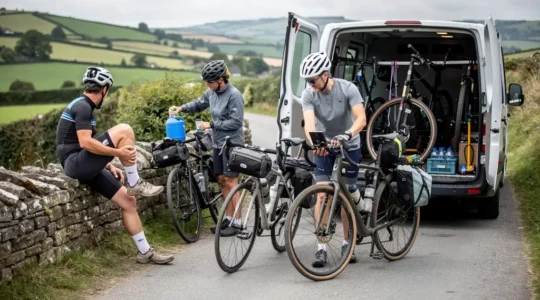
Which Type of Cycling Tour Fits You if You Want 60–100 km Days Without Stress
Riding 60–100 km a day can make for a rewarding cycling holiday. The challenge is rarely the distance alone. It is knowing what happens when the hills are steeper than expected, your legs feel heavy on day three, a tyre…
Lire la suite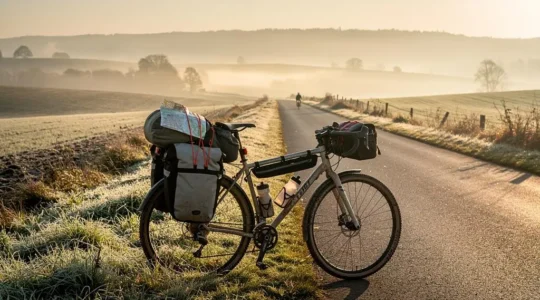
How to Plan a 7-Day Long-Distance Cycling Route With 80 km Days Without Route Surprises
A seven-day cycling tour covering approximately 80 km per day requires more than seven routes that add up to the right distance. Each day must also be realistic with luggage, climbing, changing weather, limited services and the possibility of an…
Lire la suite