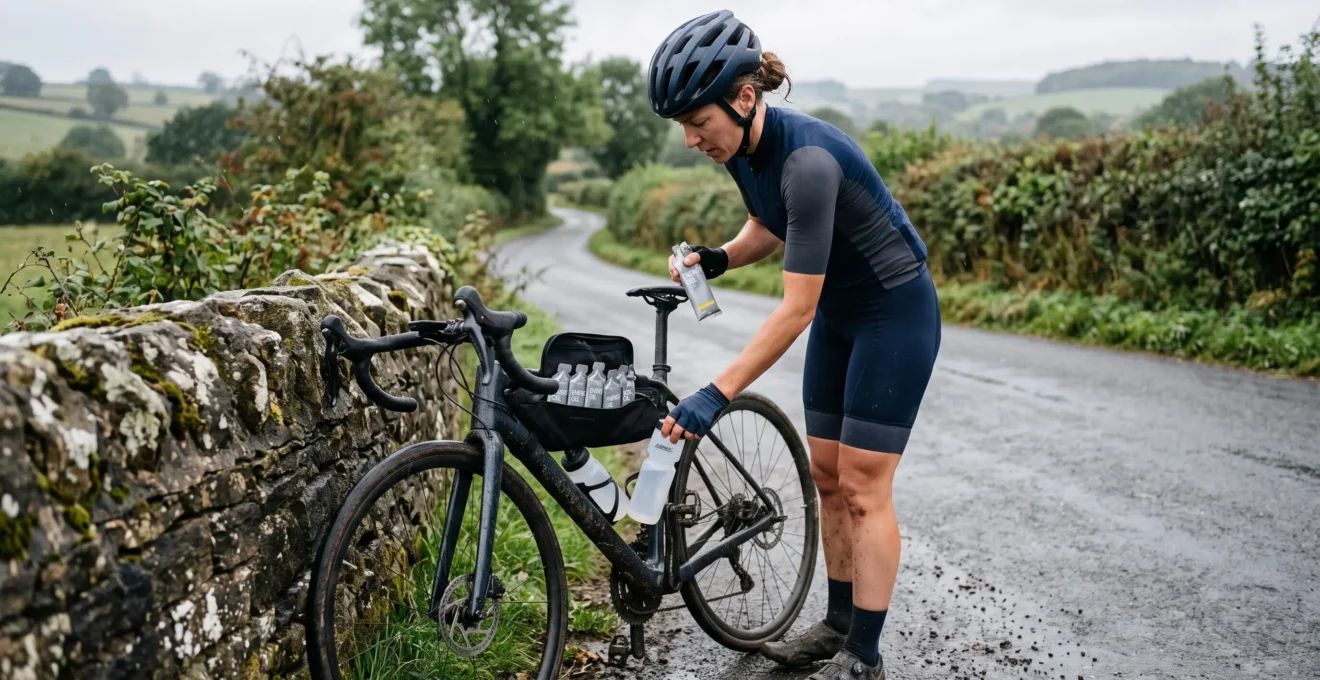
For most endurance cyclists riding for two to six hours, a practical starting point is to target 30–60 g of carbohydrate per hour, then calculate how many gels that requires from the carbohydrate content printed on each packet. A gel is only one way to meet that target: sports drinks, bars and other suitable foods also contribute. The right intake depends on ride intensity, duration, what you ate beforehand and how much carbohydrate your gut can tolerate.
Preventing a bonk is not simply a matter of taking more gels. Starting early, spreading carbohydrate intake across the ride and matching fluid intake to your needs can help maintain energy availability without overloading your digestive system. Taking a concentrated gel without accounting for its composition or your fluid intake may aggravate gastrointestinal discomfort, while increasing carbohydrate intake too quickly can exceed your current tolerance.
The safest approach is to establish a repeatable fueling plan during training. Begin with an achievable hourly target, count carbohydrates from every source, and increase intake gradually if your rides demand more. There is no universally correct number of gels, no guaranteed water-to-gel ratio and no single schedule that prevents every bonk or stomach cramp.
Energy gel fueling: the essentials
- Start with 30–60 g of carbohydrate per hour for prolonged rides, adjusting for intensity, duration and individual tolerance.
- Begin fueling early and follow a planned schedule rather than waiting for hunger, heavy legs or a sudden loss of power.
- Count gels and drink-mix carbohydrates together, match fluid intake to your needs, and practise your strategy before an important ride.
- Why Do Energy Gels Make Some Riders Feel Sick Within 20 Minutes?
- How to Build a Gel Plan for a 3-Hour Ride Using a Simple 30–60 g Rule?
- Which Should You Choose: Gels or Carb Drink Mix if It’s Hot and You Sweat a Lot?
- The Fueling Delay Mistake That Causes the Classic Late-Ride Bonk
- When Should You Take a Gel Before a 20-Minute Climb to Avoid a Mid-Climb Fade?
- How to Estimate Your Bonk Risk Before a Ride Using 3 Simple Inputs?
- How to Build a Pre-Ride Meal Plan if You Only Have 45 Minutes Before Rolling Out?
- What Does Glycogen Depletion Feel Like and How Do You Stop It Before It Hits
Why Do Energy Gels Make Some Riders Feel Sick Within 20 Minutes?
Energy gels can cause nausea or stomach discomfort when carbohydrate delivery, fluid intake and exercise conditions exceed what a rider’s digestive system can comfortably handle. Concentrated carbohydrate in the gut and difficulty absorbing a large carbohydrate load are two possible contributors, but timing alone cannot identify the cause. A gel that causes trouble shortly after ingestion does not automatically mean that its ingredients are unsuitable.
One mechanism involves concentration. A thick or highly concentrated carbohydrate bolus can create an osmotic load in the digestive tract, affecting fluid movement and comfort. Taking a gel with an appropriate amount of water may help dilute that load, although the best fluid volume depends on the product, the rider and the conditions. Some gels are designed to be taken with water; others have different formulations and instructions.
A second consideration is carbohydrate composition. Glucose and fructose use different intestinal transport pathways. Combining them can support higher carbohydrate oxidation rates than relying on glucose alone, but that does not make every glucose-fructose formulation comfortable for every cyclist. A large intake can still exceed an individual’s absorption capacity.
The Sports Dietitians Australia and Ultra Sports Science Foundation gastrointestinal position statement identifies carbohydrate intake, hydration and gut training as relevant management strategies. It also cautions against attributing every exercise-related gastrointestinal symptom to a single cause.
Use the timing of symptoms as a clue, not a diagnosis. Nausea shortly after a gel taken on an empty stomach may suggest that concentration, dose or the immediate feeding conditions deserve attention. Symptoms that accumulate later in a ride may also involve repeated carbohydrate intake, dehydration, heat or exercise intensity. Neither pattern proves a specific mechanism.
Test one variable at a time on training rides: follow the packet’s water instructions, reduce the dose if necessary, adjust carbohydrate composition or lower the effort around feeding. Record what changes. If symptoms persist, are severe or recur despite adjustments, seek advice from a qualified sports dietitian or healthcare professional.
The objective is not to force the gut to tolerate every gel. It is to find a combination of carbohydrate dose, composition, fluid intake and exercise intensity that supports the ride without repeatedly provoking symptoms.
How to Build a Gel Plan for a 3-Hour Ride Using a Simple 30–60 g Rule?
For a three-hour ride, start by choosing an hourly carbohydrate target within the conventional 30–60 g range, then divide that amount across gels and any carbohydrate drink or food. A rider with lower tolerance or a relatively moderate session may start near the lower end, while a trained rider undertaking a demanding ride may aim higher if that intake has been practised successfully. The target is total carbohydrate, not gels alone.
The Sports Medicine review on carbohydrate intake during exercise describes 30–60 g/h as a conventional recommendation and discusses approximately 60 g/h for exercise lasting around two to three hours. These figures are useful starting points, not individual prescriptions. The appropriate amount depends on the demands of the session, the rider’s preparation and gastrointestinal tolerance.
For a practical plan, assume a hypothetical gel contains 25 g of carbohydrate and the chosen target is 50 g/h. Two such gels per hour would provide 50 g/h if no other carbohydrate were consumed. If a sports drink supplies part of the target, fewer gels may be needed. Always use the actual carbohydrate amount on the product label; sachet size and the word “energy” do not tell you how many grams of carbohydrate it contains.
Start fueling early in the ride rather than waiting until hunger or fatigue appears. For example, divide the hourly target into manageable portions and distribute them at regular, convenient intervals. The precise spacing should reflect the size of each serving, the product directions and your tolerance. There is no universally validated interval that suits every cyclist.
Gut training matters if the target you need is higher than the amount you currently tolerate. In a controlled trial involving 18 endurance runners, two weeks of repeated carbohydrate intake during exercise reduced gastrointestinal symptoms and carbohydrate malabsorption. The randomised gut-training trial indexed in PubMed supports practising carbohydrate intake, but its small running sample does not establish that every cyclist can tolerate a particular high intake after two weeks.
One common mistake is double-counting neither drink mix nor food: a rider tracks two gels per hour but overlooks the carbohydrate already present in a bottle. This can push the total beyond the planned target and make the stomach feel worse. Add up all sources before deciding how many packets to carry.
Build and verify your three-hour fueling plan
- Choose an initial hourly carbohydrate target; record the number of grams you intend to consume each hour.
- Read the nutrition labels on your gels and drinks; record the carbohydrate grams per serving.
- Calculate the contribution from each source; produce a simple hourly total that avoids double-counting.
- Write down the planned feeding times and the fluid instructions for each product; keep the schedule accessible during the ride.
- After a training ride, log the actual intake, effort and any gastrointestinal symptoms; use that record to adjust the next session.
Keep the first version simple. If it is comfortable and the ride demands more carbohydrate, increase intake gradually during training rather than making a large jump on event day.
Which Should You Choose: Gels or Carb Drink Mix if It’s Hot and You Sweat a Lot?
When heat increases your need to manage fluid intake, a carbohydrate drink can be a convenient foundation for fueling because it combines carbohydrate and fluid in one source. Gels remain useful when drinking is difficult, such as on technical sections or during short, demanding efforts. Neither option is universally superior: the better choice depends on hydration needs, carbohydrate targets, carrying capacity and what your stomach tolerates.
Start by considering how much fluid you need for the conditions and how much carbohydrate you intend to consume. A concentrated gel provides carbohydrate in a small package but does not replace the fluid needed for hydration. A drink mix delivers both, although its carbohydrate concentration still matters. A very concentrated bottle may not provide the same fluid availability as a more dilute drink, and consuming more drink mix does not automatically solve a hydration problem.
Heat can also complicate the interpretation of stomach symptoms. Exercise itself affects gastrointestinal function, while inadequate hydration may contribute to carbohydrate malabsorption under some conditions. Nausea during a hot ride therefore does not prove that a gel is unsuitable. Fluid needs vary with sweating, conditions, exercise duration and individual tolerance; drinking excessively can cause problems too.
A practical default is a hybrid strategy: use drink mix to supply a planned share of the hourly carbohydrate target, then carry gels to fill the remaining gap or cover moments when drinking is impractical. This approach can reduce the need to swallow multiple gels close together, provided the drink’s concentration and total intake suit your tolerance.
Use the following decision points before a hot ride:
- Fluid needs: estimate your needs from your usual response to comparable conditions, and plan access to enough fluid without forcing intake beyond thirst or tolerance.
- Carbohydrate concentration: check the amount of carbohydrate in each bottle and gel, and avoid accidentally concentrating your total intake more than intended.
- Practicality: consider bottle capacity, refill opportunities and whether opening a gel is safe during the section ahead.
Test the combination in training, especially when the weather changes. The goal is to meet carbohydrate needs and replace fluid appropriately, not to maximise either intake independently of what your body can use comfortably.
The Fueling Delay Mistake That Causes the Classic Late-Ride Bonk
Waiting until you feel weak before taking a gel is a risky fueling strategy because the symptoms of inadequate carbohydrate availability can appear after your earlier decisions have already affected the ride. Carbohydrate consumed late can support circulating glucose availability, but it cannot instantly replenish muscle glycogen that has been substantially depleted. Prevention therefore depends on planning intake before the familiar late-ride fade begins.
Muscle glycogen is stored carbohydrate that supports working muscles, particularly during harder efforts. Carbohydrate consumed during exercise can help maintain circulating glucose and reduce reliance on internal carbohydrate stores, but the contribution of a gel depends on timing, digestion, absorption and the demands of the effort. Taking a gel when fatigue becomes dramatic may help, yet it should not be expected to restore the rider immediately to their earlier performance.
A better rule is to fuel according to the clock and the planned effort, not just according to hunger. Set reminders or use a simple schedule based on your chosen hourly target. For a demanding group ride, reconsider that schedule if repeated surges make the session harder than expected. Higher intensity can increase carbohydrate demand, so a plan designed for steady endurance riding may not fully cover a competitive group effort.
There are two common patterns to examine. An early fade may reflect starting with inadequate carbohydrate availability, an unexpectedly hard opening or incomplete recovery from previous training. A late fade may reflect a long gap between feedings, insufficient total intake or cumulative fatigue. These patterns are clues, not definitive diagnoses; pacing, hydration, heat and other factors can produce similar sensations.
Review ride files and fueling notes together. Record when the effort increased, when you ate, what you drank and when symptoms appeared. That information is more useful than simply counting how many gels were left in your pocket at the finish.
A schedule is not a reason to ignore symptoms or force food when you feel unwell. It is a way to reduce avoidable gaps while leaving room to adjust effort, fluid intake and carbohydrate delivery when conditions change.
When Should You Take a Gel Before a 20-Minute Climb to Avoid a Mid-Climb Fade?
For a planned 20-minute climb, take carbohydrate early enough that you are not relying on a gel swallowed at the base to solve an energy shortage halfway up. The useful timing depends on your previous intake, the intensity of the climb, the product and your digestive response. A gel is a top-up within a broader fueling plan, not a guaranteed rescue for depleted glycogen stores.
During a hard climb, working muscles draw on stored glycogen as well as circulating fuels. Carbohydrate taken during the effort can support glucose availability, but digestion and absorption take time, and a single serving cannot immediately replace muscle glycogen that has already been used. Arriving at the climb well-fueled matters more than trying to compensate at the last moment.
There is no evidence in the supplied sources establishing one exact number of minutes before every climb. Rather than treating a fixed interval as universal, test your timing on training climbs of similar length and intensity. Record when you take the gel, what you ate beforehand, how hard you climb and whether you notice nausea, a loss of power or no meaningful change.
Effort also affects the decision. Very hard exercise can make feeding less comfortable for some riders. If a gel immediately before a maximal climb repeatedly causes problems, try taking the planned serving earlier, using a smaller serving where appropriate or using a tolerated carbohydrate drink instead. Follow the product instructions and include that carbohydrate in your total hourly intake.
Do not compensate for an inadequate ride-long plan by stacking several gels immediately before a major climb. This can increase the digestive load without solving the underlying energy deficit. If the climb comes late in a long ride, review the hours leading up to it as well as the immediate pre-climb window.
The aim is to begin the climb with adequate carbohydrate availability and a comfortable stomach. A well-executed hourly plan makes that more achievable than relying on one last-minute gel.
Key takeaways before assessing your bonk risk
- Ride duration alone does not determine how much carbohydrate you need; intensity and your actual fueling capacity matter.
- Previous training and meals affect starting carbohydrate availability, so the same ride can feel different on different days.
- Use a realistic, tested hourly target and adjust the plan before a high-demand ride rather than experimenting during the event.
How to Estimate Your Bonk Risk Before a Ride Using 3 Simple Inputs?
You can estimate your risk of a late-ride energy fade by examining three inputs: the ride’s planned duration and intensity, the hourly carbohydrate intake you have actually tolerated, and your likely starting carbohydrate availability after recent meals and training. These inputs cannot predict a bonk with certainty, but together they reveal whether your planned fueling strategy looks reasonable for the demands of the session.
Input 1: Duration and intensity. A steady endurance ride and a ride with repeated hard surges place different demands on carbohydrate availability. A longer session also extends the period over which feeding decisions accumulate. Consider the actual route, expected effort, climbs and group dynamics rather than relying only on the advertised distance.
Input 2: Tested fueling capacity. Use the amount of carbohydrate you have successfully consumed during comparable training rides without unacceptable gastrointestinal symptoms. If you have only tolerated a lower intake, do not assume you can jump to a substantially higher one on event day. Your current tested intake is a practical planning limit, not necessarily your permanent physiological ceiling.
Input 3: Starting carbohydrate availability. Consider the timing and content of your last meal, how much carbohydrate you ate during the preceding day and whether you are recovering from a demanding session. Back-to-back hard rides or inadequate recovery may leave you less well prepared for another demanding effort. The same hourly gel plan can therefore produce different outcomes on two otherwise similar rides.
Combine these inputs qualitatively rather than inventing a precise risk score. A moderate, familiar ride with a tested fueling routine and adequate preparation may need only a straightforward plan. An unusually hard ride with a long duration, a low tested intake or incomplete recovery deserves more careful pacing and fueling. There is no validated universal calculation in the supplied evidence that converts these three inputs into a numerical probability of bonking.
Use the assessment to choose an action: keep a routine plan when the demands are familiar, tighten the feeding schedule when gaps are likely, and reduce the planned intensity or build tolerance gradually when your current fueling capacity is insufficient for the session.
This assessment is a planning aid, not a medical test or guarantee. Its value comes from making hidden constraints visible before they become a problem on the road.
How to Build a Pre-Ride Meal Plan if You Only Have 45 Minutes Before Rolling Out?
With only 45 minutes before departure, a smaller, familiar carbohydrate-rich snack or a suitable carbohydrate drink is often more practical than trying to eat a large breakfast. A short window does not provide the same opportunity as a meal eaten several hours before exercise, and the amount you can comfortably consume varies. The priority is to avoid an unnecessarily heavy meal while accounting for any shortfall in the on-bike fueling plan.
Choose foods you already know sit comfortably before riding. Depending on your tolerance, options may include a banana, white toast with a familiar low-fat topping, or an easily consumed carbohydrate drink. Keep the serving moderate enough to avoid feeling uncomfortably full. There is no single evidence-based portion size for every rider with precisely 45 minutes available.
Large portions of high-fat or high-fibre foods may be less comfortable close to exercise for some people, particularly if they are not accustomed to eating them before riding. A heavy protein-rich meal can also be impractical when time is limited. This does not mean these foods are inherently unsuitable; it means that meal size, composition and timing should fit the short pre-ride window and the individual’s digestive response.
Pre-ride preparation also includes the previous meals and recovery from earlier training. The International Society of Sports Nutrition position stand on nutrient timing discusses the relationship between carbohydrate availability before exercise and intake during prolonged exercise. Its broader recommendations for pre-exercise carbohydrate intake over several hours should not be compressed mechanically into a 45-minute window.
If you have not eaten enough to support the planned session, account for that limitation rather than assuming one gel at the start will make up the difference. Begin your planned on-bike fueling early, use a carbohydrate source you have already tested, and consider moderating the intensity if the session demands more than your preparation supports.
When suitable food is unavailable, a familiar carbohydrate drink may be a practical fallback. If you cannot comfortably eat or drink enough before departure, adjust the session’s expectations and avoid treating the original plan as fixed regardless of how you feel.
A limited breakfast window is manageable for many rides, but it is not a reason to ignore preparation. The earlier meal pattern, the first-hour feeding schedule and the planned intensity should work together.
What Does Glycogen Depletion Feel Like and How Do You Stop It Before It Hits
Glycogen depletion can become noticeable as a gradual loss of sustainable power, legs that feel unusually flat, difficulty maintaining a familiar pace or stronger hunger during a long ride. These sensations are not specific to glycogen depletion: heat, dehydration, accumulated fatigue, inadequate pacing and other problems can feel similar. The most useful response is to recognise changes early, reduce unnecessary effort and review the fueling plan before performance collapses.
The classic bonk can seem abrupt even when carbohydrate availability has been falling for some time. As the ride continues, stored carbohydrate is used to support working muscles, while the body’s need to maintain blood glucose remains important. When the available supply no longer matches the demands of the effort, maintaining power can become much harder. Waiting for dramatic symptoms as the signal to eat leaves less room to manage the problem calmly.
If you notice an early fade, take the following steps:
- Reduce the effort temporarily. Ease off hard surges and settle into a sustainable pace rather than trying to force your previous power.
- Take a familiar carbohydrate source if you can tolerate it. Count the serving toward your overall plan and follow the product’s directions.
- Check your fluid needs and conditions. Consider heat, sweating and the fluid you have already consumed without forcing excessive drinking.
- Reassess the remaining ride. Shorten the route, reduce the intensity or arrange assistance if symptoms are severe or you cannot continue safely.
Expectations should remain realistic. Carbohydrate intake may support circulating glucose availability, but it does not instantly restore depleted muscle glycogen or erase the effects of prolonged exertion. Continuing at the same intensity after a major fade may prolong the problem rather than solve it.
Personal early-warning signs are worth recording during training. Note when power begins to fall, what the previous feeding interval looked like, how hard the ride became and whether symptoms improved after easing the effort. Compare these records with your planned carbohydrate intake and starting preparation. Over time, the pattern can help refine both your hourly fueling target and your assessment of bonk risk.
For your next long ride, write down a realistic carbohydrate target, schedule your early feedings, check the carbohydrate contribution of every drink and gel, and carry a fluid plan suited to the conditions. Review the results after the ride and change one variable at a time. Consistent practice is a more dependable way to refine your strategy than waiting for a bonk to tell you that it failed.
How many energy gels should I take per hour on a long ride?
Start by targeting 30–60 g of carbohydrate per hour for a prolonged ride, then divide that total between gels, carbohydrate drinks and suitable foods. The number of gels depends on the carbohydrate content of each product and your other intake. Riders should build up gradually toward higher targets if their training demands them and their digestive systems tolerate them.
Should I always drink water with an energy gel?
Follow the product’s instructions. Some gels are intended to be consumed with water, while formulations differ in concentration and composition. There is no universally established water-to-gel ratio that works for every rider. Account for the fluid already available from your drink, your hydration needs and your gastrointestinal tolerance.
Can taking too many energy gels cause stomach cramps?
A high carbohydrate intake that exceeds your current tolerance can contribute to gastrointestinal symptoms. Concentrated carbohydrate, carbohydrate composition, fluid intake and exercise conditions may all matter. Count the carbohydrates in drinks and food as well as gels, and practise the planned intake during training instead of making a large increase on event day.
Can an energy gel stop a bonk once it has started?
A gel may provide carbohydrate that supports circulating glucose availability, but it cannot instantly replenish muscle glycogen that has been substantially depleted. If you begin to fade, reduce the effort, take a familiar carbohydrate source if you can tolerate it, reassess hydration and consider shortening the ride. Severe symptoms or an inability to continue safely require appropriate assistance.
Is 60 g of carbohydrate per hour suitable for every cyclist?
No. Around 60 g/h is a useful reference point for many prolonged endurance sessions, but the appropriate target depends on duration, intensity, preparation and individual tolerance. A rider who currently experiences gastrointestinal symptoms at a lower intake should begin with a manageable amount and practise gradual increases during training rather than treating 60 g/h as a compulsory minimum.