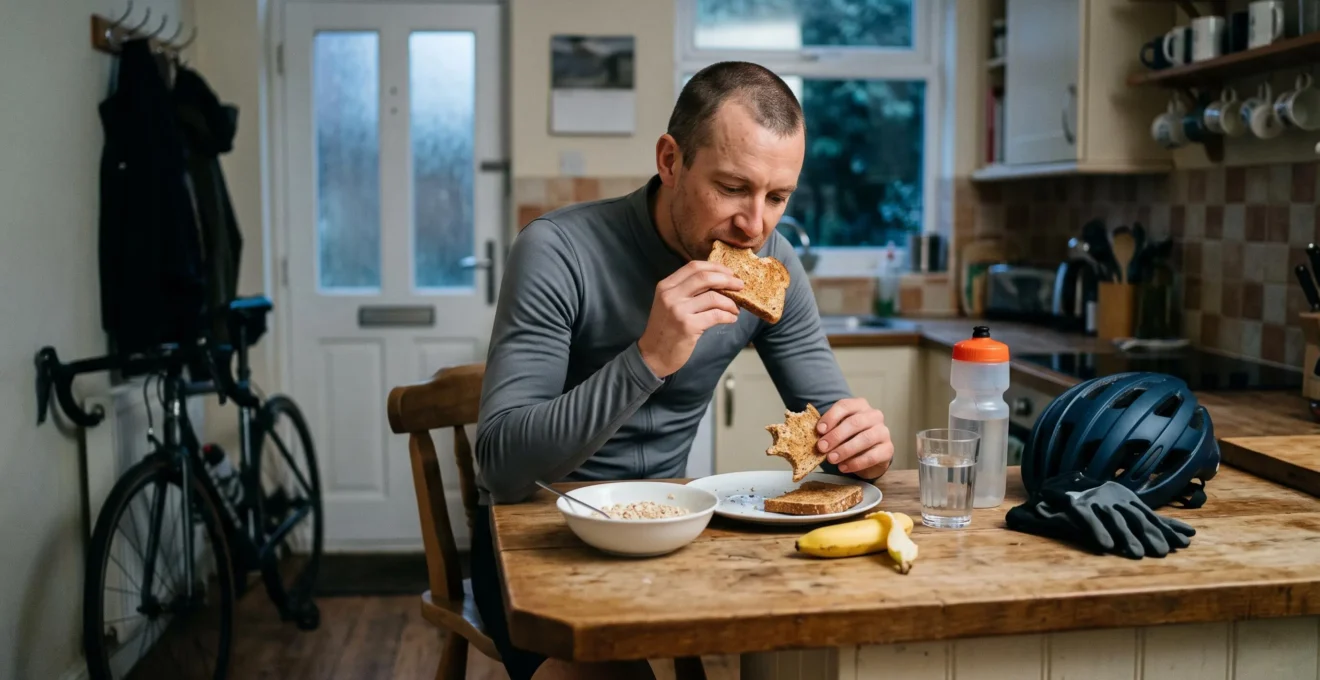
The best pre-ride meal is one that supplies enough carbohydrate to support your effort without leaving your stomach feeling heavy. If you have 60–120 minutes before cycling, a practical starting point is a carbohydrate-rich snack or light meal, such as toast with jam, a banana, or a modest bowl of oats if you tolerate them well. The right amount depends on ride duration, intensity, what you ate previously and your individual digestion.
For morning and lunchtime riders, timing matters as much as food choice. A large breakfast may be difficult to digest before an early departure, while a very small snack may not provide enough fuel for a demanding endurance session. Neither a strict fasting routine nor a large meal is automatically best for every cyclist.
The goal is to start with adequate energy, avoid preventable gastrointestinal discomfort and have a plan for eating during the ride. For longer sessions, pre-ride food and on-bike carbohydrates work together: eating before departure helps establish your starting fuel availability, while regular intake during exercise helps maintain it. A repeatable routine is more useful than searching for a perfect breakfast that works identically every day.
Pre-Ride Nutrition at a Glance
- Eat a familiar, carbohydrate-rich meal 60–120 minutes before riding, adjusting portion size, fat and fibre to your digestion and available time.
- For rides lasting longer than an hour, plan on-bike carbohydrates according to intensity, duration and tolerance rather than waiting until hunger appears.
- Test food, drink concentrations and caffeine timing during training, then use the results to build a reliable routine for workday rides.
- Why Can a « Healthy » Breakfast Make You Feel Sluggish on the Bike?
- How to Build a Pre-Ride Meal Plan if You Only Have 45 Minutes Before Rolling Out?
- Fasted Ride or Fuelled Ride — Which Should You Choose if Your Goal Is Endurance?
- The « New Product on Ride Day » Mistake That Causes Toilet Emergencies
- When Should You Take Caffeine Before a Ride to Avoid a Mid-Ride Energy Crash?
- How to Build a Gel Plan for a 3-Hour Ride Using a Simple 30–60 g Rule?
- How to Estimate Your Bonk Risk Before a Ride Using 3 Simple Inputs?
- What Does Glycogen Depletion Feel Like and How Do You Stop It Before It Hits?
Why Can a « Healthy » Breakfast Make You Feel Sluggish on the Bike?
A nutritious breakfast can still be poorly timed or difficult to digest before cycling. Large portions of high-fibre cereal, a rich smoothie bowl or avocado toast with substantial added fat may leave some riders feeling full or uncomfortable, particularly when the ride begins soon after eating. Carbohydrate eaten shortly before exercise can also produce a temporary blood-glucose dip in some circumstances, but this does not mean that every healthy breakfast causes low blood sugar or reduced performance.
There are two different problems to distinguish. First, fat and fibre can slow digestion, making a large meal feel heavy when you start pedalling. Second, some people experience symptoms such as shakiness, weakness or light-headedness after consuming carbohydrates shortly before exercise. A review by Jeukendrup and Killer, available in their review of pre-exercise carbohydrate feeding, found that these glucose responses do not routinely translate into worse exercise performance. Individual symptoms nevertheless justify testing a different meal composition or timing.
Use three questions to audit your usual breakfast:
- How much fibre and fat does it contain? If the meal is large and rich in both, try a smaller portion or replace some ingredients with easier-to-digest carbohydrates.
- How long before the ride do you eat? If you have less than an hour, simplify the meal rather than forcing down your usual full breakfast. If you have 90–120 minutes, a larger meal may be more comfortable.
- Do you feel heavy or energised during the first 30 minutes? Record the sensation and adjust one variable at a time, such as portion size, food choice or timing.
Foods that work well on rest days may not be ideal immediately before a hard ride. Fibre-rich foods, substantial fats and large protein servings can contribute to a balanced everyday diet and recovery, but they may not suit a narrow pre-exercise window. The answer is not to eliminate these nutrients from your diet; it is to match the meal to the session.
A sluggish start can also trigger a counterproductive response: adding extra gels or concentrated sports drinks to compensate for low energy without checking whether the original problem was inadequate fuel, digestive discomfort, pacing or another factor. More sugar will not necessarily solve a heavy stomach, and increasing intake too quickly may make gastrointestinal symptoms worse.
Track breakfast composition, timing and early-ride comfort together rather than labelling individual foods as universally good or bad. A consistent pattern across several rides is more informative than a single uncomfortable morning.
Once you know which foods sit comfortably, the next challenge is choosing a realistic version of that meal when the alarm goes off late and departure is only 45 minutes away.
How to Build a Pre-Ride Meal Plan if You Only Have 45 Minutes Before Rolling Out?
With only 45 minutes before departure, choose a modest portion of familiar, carbohydrate-rich food rather than attempting to squeeze a full breakfast into a short window. White toast with jam, a banana or a small serving of oats can be practical options, depending on your tolerance. For a hard session, prioritise readily available carbohydrate and avoid experimenting with a large, fatty or unusually fibre-rich meal immediately before setting off.
The best choice also depends on the ride. An easy spin may be manageable with a lighter snack, particularly if you ate well the previous evening. Hard intervals or a demanding endurance session place greater importance on starting adequately fuelled. If a full meal is uncomfortable this close to departure, use a smaller snack and plan your on-bike intake rather than forcing yourself to eat beyond your comfort.
Think of the available time as a practical decision guide:
| Time before riding | Practical approach | What to watch |
|---|---|---|
| About 120 minutes | A light, carbohydrate-rich meal with a portion suited to the ride | Whether the meal leaves enough time to feel comfortable before departure |
| About 60 minutes | A smaller meal or snack, such as toast or a banana | Portion size, fat, fibre and individual digestion |
| About 45 minutes | A modest serving of familiar, easy-to-digest carbohydrates | Avoiding a large meal and allowing for a gradual start |
| Almost no time | Consider a familiar carbohydrate drink or a small snack during an easy opening period | Ride intensity, previous food intake and tolerance |
These are practical starting points, not guaranteed digestion times. Individual responses vary, and a food that feels comfortable 45 minutes before a ride for one cyclist may cause discomfort for another. If you have almost no time to eat, a carbohydrate-containing drink may be easier to manage than a substantial solid meal. Start easily and begin planned fuelling early rather than assuming the drink eliminates the need to eat later.
A simple night-before system removes unnecessary decisions from the morning:
Your 5-Step Pre-Ride Preparation Checklist
- Choose the food: Lay out your planned breakfast or snack. Deliverable: one clearly chosen pre-ride food option.
- Prepare your drink: Fill your water bottle and, if appropriate, prepare your familiar carbohydrate drink. Deliverable: bottles ready for use.
- Set out your equipment: Place your helmet, gloves, cycling kit and other essentials together. Deliverable: one ready-to-go equipment area.
- Check the ride: Confirm the planned duration and intensity so you can decide whether extra food is needed. Deliverable: a simple ride-fuelling target or plan.
- Set a repeatable routine: Decide when to wake, eat and leave. Deliverable: a short morning sequence that avoids last-minute decisions.
The point is not to achieve an elaborate breakfast ritual. It is to make a reasonable choice quickly and avoid compensating for a rushed morning with an oversized meal. If you consistently struggle to eat enough before leaving, prepare a small snack and plan when to begin eating during the ride.
Even a well-planned snack is not mandatory for every easy ride, however. The decision to ride fasted or fuelled depends on what you are training for and how demanding the session will be.
Fasted Ride or Fuelled Ride — Which Should You Choose if Your Goal Is Endurance?
For most demanding endurance sessions, starting adequately fuelled is the more practical choice because it supports the availability of carbohydrate for sustained work. A fasted ride may be appropriate for some healthy, experienced cyclists undertaking a short, easy session with a specific training objective, but it is not a shortcut to better endurance for everyone. Duration, intensity, previous food intake and individual tolerance should guide the decision.
Fasted training and fuelled training serve different purposes. Exercising without eating beforehand changes the availability of energy substrates and may form part of an individual approach to metabolic flexibility. That does not mean every fasted session produces a superior adaptation or that it is necessary to improve endurance. If the session includes hard intervals, prolonged climbing or a long sustained effort, restricted carbohydrate availability can make it harder to maintain the intended power and increase the risk of running out of usable fuel.
| Session type | Starting strategy | Main consideration |
|---|---|---|
| Short, easy spin | A light snack or, for suitable experienced riders, an occasional fasted start | Keep the session genuinely easy and monitor how you feel |
| Steady endurance ride | A carbohydrate-containing snack or meal | Duration and previous-day fuelling affect the starting position |
| Long ride or demanding intervals | Start fuelled and plan carbohydrates during the ride | Maintain the intended effort rather than deliberately limiting fuel |
| Recovery after a hard session | Prioritise adequate food and recovery before the next demanding ride | Feeling rested does not guarantee that glycogen stores are fully replenished |
A useful middle ground is a minimal-carbohydrate start. A small banana, a slice of toast or another familiar snack can provide some carbohydrate without requiring a full breakfast. This can be useful when a rider wants a lighter stomach but does not want to begin a demanding session completely fasted. It should not be treated as a guaranteed compromise between performance and fat oxidation; the appropriate amount depends on the session and the rider.
Consider the whole training day, not just the minutes before departure. A hard ride after a demanding previous day may begin with lower glycogen availability, even if the cyclist feels reasonably recovered. Eating adequately after the previous session and before the next demanding ride helps support recovery, particularly when the time between sessions is limited.
After a fasted ride, do not extend the fast automatically if the next priority is recovery or another training session. A carbohydrate-containing meal, together with protein and fluids as appropriate, can help replace energy and support recovery. The urgency of carbohydrate replacement depends partly on how soon another demanding session follows.
Once that decision is made, consistency becomes especially important. Familiar food is only part of the equation: the same care should apply to gels, drink mixes and other products consumed once the ride is underway.
The « New Product on Ride Day » Mistake That Causes Toilet Emergencies
Trying an unfamiliar gel, energy bar or concentrated sports drink during a long or important ride introduces an avoidable variable. Exercise can alter gastrointestinal function, and endurance athletes may experience bloating, nausea, urgency or other symptoms for several reasons. A product that seems harmless at rest may feel different during sustained effort, particularly when the serving size or drink concentration is unfamiliar.
A 2025 systematic review of gastrointestinal symptoms during endurance exercise examined 29 studies and found promising evidence for gut-training approaches. The review also emphasised that exercise-related digestive symptoms have multiple contributing factors. This supports gradual, individual testing rather than assuming that one product, ingredient or strategy is responsible for every episode of discomfort.
Use a short local ride or an indoor trainer session to test a new product before relying on it during a long ride or event. Monitor three things:
- Bloating: Does your stomach feel increasingly distended or uncomfortable?
- Urgency: Do you experience a sudden need to find a toilet?
- Sloshing or nausea: Does the drink or food seem difficult to tolerate during movement?
Test the amount as well as the product. A familiar gel can still cause trouble if you take more than usual, combine it with a highly concentrated drink or substantially increase your hourly carbohydrate intake. Some products also contain sweeteners, including sugar alcohols, that certain people find difficult to tolerate. Individual ingredients and serving sizes matter, so check the product label and your own response rather than assuming all sports nutrition products behave alike.
If discomfort develops during a ride, avoid adding more of the suspected trigger simply to reach a numerical target. Ease the intensity if necessary, sip fluids sensibly and review whether the drink is unusually concentrated or the intake has increased too quickly. Diluting a drink may be appropriate when the mix is more concentrated than intended, provided the product instructions and hydration needs are respected. Do not assume every symptom can be solved by reducing concentration; persistent or severe symptoms require appropriate medical attention.
For future sessions, change one variable at a time: product, dose, concentration or timing. This makes it easier to identify a tolerable routine and gradually practise carbohydrate intake without unnecessarily restricting fuel.
Product tolerance is one part of a comfortable ride. Another is deciding whether caffeine belongs in the plan and, if so, when to take it.
When Should You Take Caffeine Before a Ride to Avoid a Mid-Ride Energy Crash?
For cyclists who choose to use caffeine, approximately 60 minutes before exercise is the most commonly studied timing, although the best timing depends on the formulation and individual response. Caffeine may improve endurance performance, but it does not replace carbohydrate or guarantee stable energy throughout a ride. The practical objective is to use an appropriate amount at a useful time without creating sleep problems, anxiety or other unwanted effects.
The International Society of Sports Nutrition‘s position statement on caffeine and exercise performance describes performance benefits across a range of exercise settings and discusses dose, timing and individual variability. The statement identifies 3–6 mg per kilogram of body mass as a commonly studied performance range, not a requirement for every cyclist. Lower amounts may be sufficient for some people, and higher doses can increase adverse effects without being necessary for performance.
Formulation matters. Coffee and caffeine capsules are commonly discussed in relation to pre-exercise timing, while caffeinated chewing gum may act over a shorter period. There is no universal timing rule that guarantees the same response to every espresso, coffee or supplement. Test your chosen form during ordinary training rather than trying a new dose immediately before an important event.
It is also important to distinguish a caffeine effect from a fuelling problem. A high-sugar breakfast followed by a later energy dip does not prove that caffeine caused the problem, and current evidence does not establish that combining caffeine and sugar predictably produces a crash. The more useful approach is to check meal size, carbohydrate availability, pacing, hydration and the timing of any caffeine intake.
Ride duration can help determine whether caffeine is worthwhile. For a short, easy spin, a supplement may add little practical value. For a long endurance session, some riders may prefer to reserve part of their usual caffeine intake for later in the ride rather than consuming everything before departure. This is an optional strategy, not a proven improvement for every athlete.
Habitual coffee drinkers and occasional users may respond differently. Keep a simple record of the caffeine source, amount, timing, perceived alertness, stomach comfort and sleep afterwards. Avoid using caffeine to compensate repeatedly for inadequate sleep, and remember that late intake can interfere with recovery.
For a long ride, the more dependable protection against preventable energy dips is a plan that combines the pre-ride meal with a realistic carbohydrate schedule during the session.
How to Build a Gel Plan for a 3-Hour Ride Using a Simple 30–60 g Rule?
For a prolonged, demanding ride, 30–60 grams of carbohydrate per hour is a useful starting range for planning on-bike intake, not a universal prescription. The appropriate amount depends on exercise intensity, duration, prior fuelling, gastrointestinal tolerance and the rider’s ability to consume and absorb carbohydrates comfortably. A three-hour ride therefore needs a plan that fits the session and can be practised, rather than a fixed number of gels applied to everyone.
The International Society of Sports Nutrition’s position statement on nutrient timing discusses carbohydrate availability before and during prolonged exercise. Its 30–60 g/h recommendation applies particularly to extended, high-intensity activity; shorter or easier sessions may require a different approach. Longer events can involve other fuelling strategies, but increasing intake should be gradual and based on individual tolerance.
Start by checking the carbohydrate content of the products you already tolerate. A gel, drink mix or other food may contain different amounts of carbohydrate per serving, so count the label values rather than assuming every gel provides the same quantity. If a drink contributes carbohydrate, include it in the hourly total. This avoids accidentally consuming much more than planned by stacking products without accounting for their combined contribution.
For a three-hour ride, use a repeatable schedule that begins before hunger becomes pronounced. Divide your chosen hourly target into manageable portions, with regular opportunities to eat or drink throughout the ride. For example, a rider aiming for the lower end of the range could spread intake across several smaller servings rather than taking a large amount at once. The exact spacing and number of gels should reflect the products used, the ride intensity and the rider’s tolerance.
The pre-ride meal influences how you begin, but it does not eliminate the need for on-bike fuelling during a long session. If you have eaten a substantial carbohydrate-rich meal 60–120 minutes beforehand, you may be comfortable with a planned intake early in the ride rather than immediately reaching for a gel at the start. If the meal was small or missed, you may need to begin your on-bike plan sooner. Neither approach removes the importance of regular intake as the ride progresses.
Practise the plan on training rides. Repeated, deliberate exposure to carbohydrate intake during exercise may improve tolerance over time, although responses differ and improvement is not guaranteed. Increase intake gradually, monitor digestive symptoms and avoid making a major jump in hourly carbohydrate consumption on an important ride.
Even a sensible plan can become inadequate when the ride starts with depleted energy stores or follows a demanding training block. Assessing those starting conditions helps determine how much preparation and backup fuel you need.
Key Takeaways Before Assessing Bonk Risk
- A pre-ride meal supports your starting fuel availability, but the previous evening’s food and recent training also matter.
- A carbohydrate target is useful only when it matches the ride and remains tolerable; practise it before relying on it during a long session.
- Use a personal risk check to decide whether you need a larger breakfast, more on-bike food or a route that allows an early return.
How to Estimate Your Bonk Risk Before a Ride Using 3 Simple Inputs?
You can make a practical estimate of your risk of running out of usable energy by checking three things before departure: the ride’s duration and intensity, your recent carbohydrate intake, and your recent training load. These inputs are a planning aid, not a validated medical or performance scoring system. Together, they help you decide whether a light snack is likely to be sufficient or whether you should prioritise more substantial fuelling and carry extra food.
Input 1: Ride duration and intensity. A short, easy ride generally creates a different carbohydrate demand from a long session with hard intervals or sustained climbing. The longer and more demanding the ride, the more important it becomes to plan fuel before departure and at regular intervals during exercise.
Input 2: Starting carbohydrate availability. Think about what you ate the previous evening and this morning, including whether your meals contained substantial carbohydrate. A small breakfast after a low-intake day may leave you less prepared for a long ride than the same breakfast after adequate meals. Feeling comfortable or not feeling hungry is not a reliable measurement of glycogen stores.
Input 3: Recent training load. Consider the previous day’s session, consecutive hard training days and whether recovery has been sufficient. A demanding training block can increase the importance of replenishing carbohydrate between sessions. Poor sleep and accumulated stress may also affect perceived effort and performance, even though they cannot be converted into a precise glycogen estimate from a simple checklist.
Use the three inputs to assign a provisional planning category:
| Category | Typical context | Practical response |
|---|---|---|
| Low | Short, easy ride after adequate recent meals and manageable training | Choose a comfortable starting snack if needed and carry food appropriate to the planned duration. |
| Moderate | Longer ride, uncertain carbohydrate intake or recent demanding exercise | Eat a planned carbohydrate-rich meal or snack and prepare a regular on-bike fuelling schedule. |
| High | Long or intense ride following limited carbohydrate intake and substantial recent training | Prioritise adequate pre-ride food, carry additional carbohydrates and consider a route with options to shorten the session. |
These categories are deliberately qualitative. They do not predict exactly when a cyclist will experience a bonk, and a rider can still feel fatigued for reasons unrelated to glycogen availability. Heat, dehydration, illness, poor pacing and other factors can contribute to an unexpectedly difficult ride.
Pay particular attention to recovery days. A cyclist may feel ready to train again after a hard session while still needing additional time and carbohydrate to replenish energy stores. When the next ride is demanding, base the plan on the training completed and the food consumed, not just on how fresh your legs feel.
The final step is recognising what happens when preparation is not enough. Early warning signs can help you respond before a manageable drop in energy develops into a more serious loss of performance.
What Does Glycogen Depletion Feel Like and How Do You Stop It Before It Hits?
Glycogen depletion can contribute to a sudden loss of cycling performance, but there is no single symptom that proves it is happening. Early warning signs may include growing hunger, difficulty concentrating, irritability, unusually heavy legs and a power drop that feels out of proportion to the effort. The most useful response is to follow a fuelling plan before these symptoms become pronounced, then adjust promptly if you begin to struggle.
For many riders, the first sign is not a dramatic collapse. You may simply notice that maintaining your usual pace requires more effort, that decisions become harder or that your mood changes unexpectedly. As the problem progresses, concentration and sustained power may deteriorate further. These symptoms can overlap with dehydration, heat stress, insufficient sleep, illness or an overly aggressive pace, so they should be interpreted in context rather than treated as a definitive diagnosis of low glycogen.
Prevention begins before departure. Eat an appropriate carbohydrate-rich meal or snack, account for the previous day’s training and decide how you will eat during the ride. On prolonged, demanding sessions, use a planned intake schedule rather than waiting for hunger. By the time you experience pronounced symptoms, your ability to maintain the intended effort may already be compromised.
If early warning signs appear, respond rather than pushing through automatically:
- Reduce the effort. Ease off the pace, especially if you are struggling to maintain control or concentrate.
- Take in suitable carbohydrates. If you can eat and swallow safely, use a familiar, fast-acting carbohydrate source that you have previously tolerated.
- Drink appropriately. Consider your fluid needs and the conditions rather than assuming every episode of fatigue is caused by a lack of water.
- Reassess before continuing. Do not immediately return to maximal effort simply because you have eaten. Allow time to determine whether you are recovering.
- End the ride if necessary. If symptoms are severe, persistent or accompanied by confusion, faintness, chest pain or other concerning signs, stop exercising and seek appropriate medical help.
Once a full bonk develops, restoring performance can take longer than correcting an early warning sign. Eating carbohydrates does not instantly restore depleted stores, and there is no guarantee that a rider can safely finish the planned distance. If symptoms are substantial, shortening the route or arranging a safe return is more sensible than treating the original training target as non-negotiable.
Use the experience to refine future rides. Record what you ate before departure, when you started taking carbohydrates, how much you consumed and when the first symptoms appeared. Compare that record with ride intensity, weather and recent training. One ride rarely establishes a definitive cause, but repeated patterns can reveal whether your pre-ride meal was too small, your on-bike intake began too late or another factor needs attention.
The most reliable strategy is a repeatable process: eat a familiar meal 60–120 minutes before departure when possible, adjust the portion to your digestion and the demands of the ride, and plan on-bike carbohydrates for longer sessions. Start with a manageable routine, test changes during training and use the results to refine your next ride.
What is the best breakfast 60 minutes before cycling?
A modest carbohydrate-rich breakfast is a practical starting point. Toast with jam, a banana or another familiar snack can work well, depending on your appetite and digestion. Keep the portion manageable, particularly before hard intervals, and avoid experimenting with unusually large or fatty meals just before departure.
Should you eat before a 30-minute bike ride?
A separate meal is not necessarily needed before every short, easy ride, especially if you have eaten adequately beforehand. If you are hungry, have not eaten for a long time or plan to ride harder, a small snack may be useful. Let the session’s demands and your individual response guide the decision.
Can you eat a banana 15–30 minutes before cycling?
Many cyclists can tolerate a banana shortly before a ride, but individual digestion varies. If you have only 15–30 minutes, keep the portion modest and consider starting at an easy pace. For a demanding or prolonged ride, make sure the overall fuelling plan also accounts for carbohydrates consumed during exercise.
How much carbohydrate should you eat during a three-hour ride?
For prolonged, demanding exercise, approximately 30–60 g of carbohydrate per hour is a useful starting range. Your needs depend on intensity, duration, prior food intake and gastrointestinal tolerance. Count carbohydrate from gels, drinks and other foods together, and practise your chosen intake during training before using it on an important ride.
Is coffee enough before a morning cycling session?
Coffee may improve alertness and exercise performance for some riders, but it does not replace carbohydrate or guarantee adequate fuelling. A short, easy ride may not require a substantial meal, whereas a long or demanding session usually benefits from a deliberate food and on-bike fuelling plan. Caffeine timing and tolerance should be tested individually.