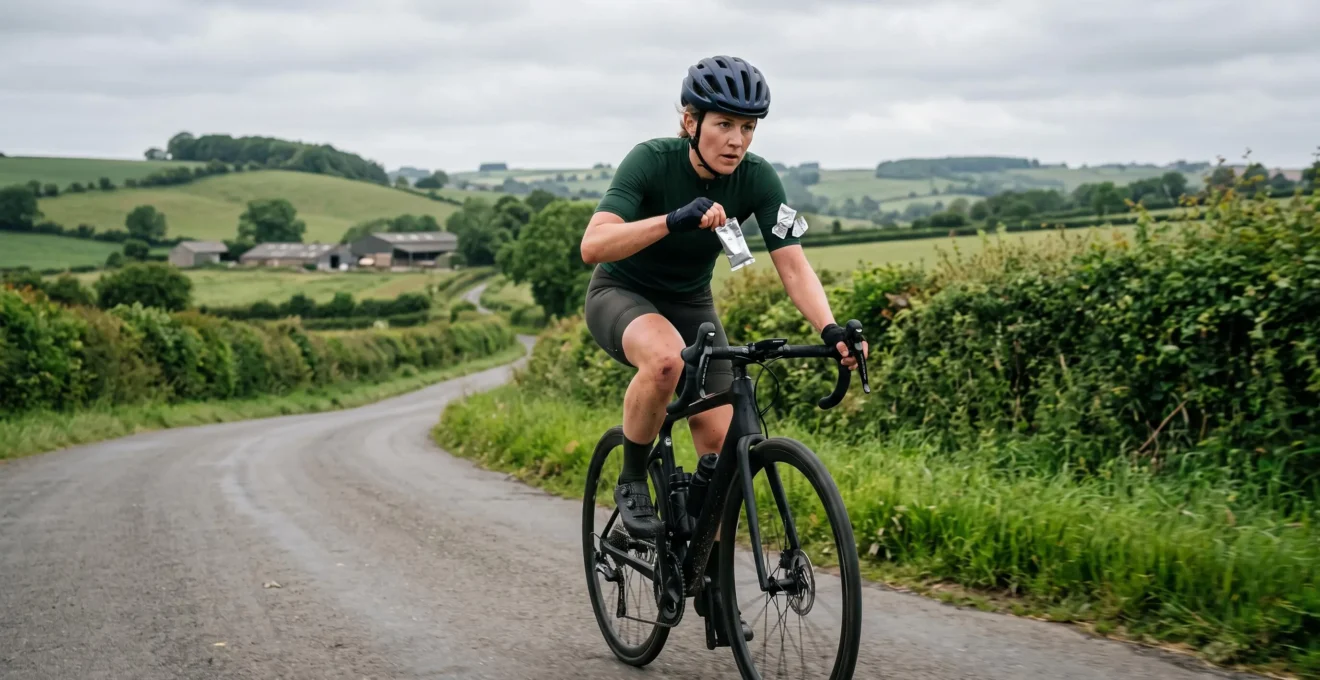
Glycogen depletion can turn a comfortable cycling session into a struggle to maintain even an easy pace. Your legs suddenly feel heavy, ordinary climbs seem impossible, and concentrating on the road becomes unusually difficult. Cyclists call this experience bonking or hitting the wall.
The sensation may arrive abruptly, but the underlying energy shortage usually develops gradually. During prolonged cycling, muscles use stored glycogen alongside circulating fuels. As carbohydrate availability declines, maintaining your chosen power output becomes increasingly difficult. A fall in blood glucose can add shakiness, weakness, confusion or a particularly sudden sense of running out of energy.
Preventing a bonk involves more than carrying an emergency gel. It requires matching your pace to the ride, starting with sufficient carbohydrate reserves, eating consistently while cycling and recovering adequately between demanding sessions.
The most useful skill is recognizing when energy demand is beginning to exceed your fueling strategy, then adjusting before your performance deteriorates.
Glycogen depletion: what cyclists need to know
- Recognize the warning signs: rising perceived effort, unusual hunger, weakness, irritability and difficulty concentrating can indicate an emerging energy problem.
- Prevent rather than rescue: control your early pace and consume carbohydrates regularly on longer rides instead of waiting until exhaustion.
- Match fueling to the workload: carbohydrate needs depend on duration, intensity, previous nutrition and gastrointestinal tolerance. Recovery nutrition also affects your next ride.
- Why Does « Hitting the Wall » Feel Instant Even When You Were Fine 5 Minutes Ago?
- How to Estimate Your Bonk Risk Before a Ride Using 3 Simple Inputs?
- Which Should You Change First to Avoid Depletion: Pace or Carbs?
- The Weight-Loss Mindset Mistake That Triggers Depletion on Group Rides
- When Should You Prioritise Post-Ride Carbs if You Ride Again Within 24 Hours?
- How to Build a Gel Plan for a 3-Hour Ride Using a Simple 30–60 g Rule?
- How to Build a Pre-Ride Meal Plan if You Only Have 45 Minutes Before Rolling Out?
- How Many Energy Gels per Hour Prevent a Bonk Without Causing Stomach Cramps?
Why Does « Hitting the Wall » Feel Instant Even When You Were Fine 5 Minutes Ago?
Hitting the wall can feel instantaneous because your ability to maintain a demanding cycling pace may deteriorate sharply after carbohydrate availability has been falling for much longer. Muscle glycogen depletion develops progressively, while inadequate blood glucose can cause more dramatic symptoms. These processes are connected but distinct, and neither follows a universal five-minute countdown.
Your muscles store glycogen as a readily available carbohydrate reserve. During cycling, they break it down to help generate energy, particularly as intensity increases. Meanwhile, liver glycogen helps maintain blood glucose, an important fuel for the brain and other tissues.
As muscle glycogen becomes limited, sustaining your previous power output becomes harder. If blood glucose also falls, weakness and impaired concentration may intensify the experience. However, a sudden decline in performance is not proof of either complete glycogen exhaustion or hypoglycemia.
The Nutrition Reviews article on glycogen metabolism explains the different roles of muscle glycogen, liver glycogen and circulating glucose in exercise performance.
Several early sensations deserve attention, especially when they appear together during a long ride:
- Maintaining familiar power suddenly feels disproportionately difficult.
- Hunger becomes distracting or unusually intense.
- Your hands feel shaky, or you experience unexplained weakness.
- Concentration declines and routine navigation decisions become harder.
- Irritability, dizziness or an unusual sense of mental fog develops.
These symptoms are not specific to glycogen depletion. Dehydration, overheating, illness and other medical conditions can produce similar experiences. A measured fall in blood glucose is also not automatically the same as symptomatic hypoglycemia.
A small controlled study involving 11 active men, described in the PubMed record of a study on transient hypoglycemia during cycling, found that blood glucose could fall during short exercise after pre-exercise carbohydrate ingestion. It did not establish that long-ride bonking necessarily follows the same mechanism.
The cognitive component matters because impaired attention can undermine your ability to respond sensibly. Rather than relying on hunger or judgment alone, set recurring fueling reminders on your cycling computer or watch before starting.
If symptoms appear, reduce effort, move to a safe stopping place and assess whether you need carbohydrates, fluids or further assistance. Do not continue riding through significant dizziness, confusion or impaired coordination.
The practical goal is to respond before symptoms become severe. That begins with evaluating the ride you are about to undertake, rather than judging your risk from fitness alone.
How to Estimate Your Bonk Risk Before a Ride Using 3 Simple Inputs?
Estimate your bonk risk by checking three things before departure: the planned ride’s duration and intensity, your carbohydrate intake across recent meals, and your recovery from previous training. Together, these reveal whether the ride may demand more carbohydrate than you are prepared to supply. Use the assessment to decide whether to ride normally, adjust your plan or postpone.
The first input is expected energy demand. A relaxed endurance ride and a fast group ride of equal duration do not place identical demands on glycogen reserves. Repeated accelerations, sustained climbs and high-intensity efforts increase reliance on carbohydrate metabolism.
Estimate duration conservatively. Include likely delays, difficult terrain and the possibility that a group ride becomes faster than advertised. Planning for an optimistic finish time can leave you without sufficient food for the actual journey.
The second input is recent fueling. Consider your last two meals. Were they substantial enough for the training you have completed? Did they contain meaningful carbohydrate, or did you skip food before an early departure?
The third input concerns residual fatigue and previous under-fueling. Glycogen restoration requires sufficient carbohydrate and recovery time. A demanding session the previous day can leave reserves incompletely restored, particularly when energy intake has been inadequate.
The following decision grid is a practical coaching framework, not a scientifically validated bonk-risk calculator.
| Risk level | Typical combination | Recommended decision |
|---|---|---|
| Lower | Manageable ride, adequate recent meals, good recovery | Go: follow your normal pacing and fueling plan. |
| Moderate | Longer or harder ride with a missed meal or incomplete recovery | Adjust: fuel before departure, start conservatively and carry sufficient carbohydrates. |
| Higher | Demanding ride combined with substantial under-fueling and residual fatigue | Shorten, replace with an easy ride or postpone until better recovered. |
A strong cyclist is not automatically protected. Fitness can increase the workload you can sustain, but it does not eliminate your need for carbohydrate when exercising for prolonged periods.
Likewise, body size, diet, training history and individual carbohydrate storage capacity vary. The grid cannot quantify exactly how much glycogen remains in your muscles.
Use previous rides to calibrate your decisions. Record when your energy declined, what you ate, how hard you rode and whether you had trained heavily beforehand. Over time, these observations are more useful than treating a generic score as a precise prediction.
Once the starting risk is understood, the next question is which intervention has the greatest value while you are riding: easing your effort or increasing carbohydrate intake.
Which Should You Change First to Avoid Depletion: Pace or Carbs?
Change your pace first when the ride is becoming harder than planned, especially early on, while maintaining your scheduled carbohydrate intake. If you begin experiencing possible under-fueling symptoms, ease off and consume a tolerable carbohydrate source promptly. Neither intervention is sufficient in every situation: reducing demand preserves remaining reserves, while eating supplies additional fuel.
Pacing and fueling solve different parts of the same problem.
Reducing intensity generally lowers carbohydrate demand relative to pushing at a harder pace. This is especially valuable when you still have substantial distance to cover.
Eating carbohydrates helps maintain circulating glucose and supplies carbohydrate that working muscles can use. However, digestion, absorption and oxidation take time. Swallowing a gel cannot instantaneously restore depleted muscle glycogen.
Consider two situations.
| Situation | Immediate priority | Supporting action |
|---|---|---|
| Early or middle of a ride, pace exceeds the plan | Reduce intensity | Continue regular carbohydrate intake. |
| Possible under-fueling symptoms develop | Ease off and take carbohydrates if safe | Stop if necessary, assess symptoms and allow time for improvement. |
| Severe weakness, confusion or unsafe coordination | Stop riding safely | Seek assistance; do not attempt to push through. |
The temptation on fast rides is to maintain the group’s pace while delaying food. This combines high carbohydrate demand with inadequate replacement.
Dropping to an easier gear or allowing a faster group to ride away may feel disappointing, but preserving energy is more productive than trying to recover after a complete performance collapse.
Taking carbohydrates during controlled riding can also be more comfortable than trying to eat during sustained maximal effort. High exercise intensity can increase gastrointestinal difficulties, although this does not mean every gel is absorbed better at a specific lower power output.
The Sports Medicine review on carbohydrate intake during exercise discusses how endurance fueling requirements depend on duration and intensity, as well as the importance of carbohydrate delivery and gastrointestinal tolerance.
A useful operating principle is to avoid treating pace and carbohydrates as competing solutions. Manage demand continuously and replace carbohydrate regularly, adjusting both when conditions change.
This becomes particularly important on group rides, where social pressure and unexpected accelerations can undermine an otherwise sensible fueling strategy.
The Weight-Loss Mindset Mistake That Triggers Depletion on Group Rides
Trying to maximize calorie burn by skipping carbohydrates can create an avoidable fueling problem during demanding group rides. The mistake is assuming that eating less during exercise always improves weight-loss outcomes, regardless of intensity or training quality.
A solo endurance session generally gives you greater control over effort. Group rides are different: the pace depends on other cyclists, climbs can become competitive, and repeated accelerations may force you above your planned intensity.
Those harder efforts increase carbohydrate demand. Arriving with limited reserves and refusing to eat can make it difficult to sustain the session.
Two training objectives are often confused:
- Energy management for body composition: maintaining an appropriate overall energy balance across training and recovery.
- Fueling for performance: supplying enough carbohydrate to support the workload of a particular session.
They are not inherently incompatible. A cyclist pursuing gradual weight loss can still fuel demanding rides appropriately and manage overall energy intake across the wider training schedule.
Severe restriction during hard sessions may reduce training quality, increase fatigue and leave the rider unusually hungry afterward. Later overeating is possible, but it is not an inevitable response, and it should not be assumed that every missed gel erases a calorie deficit.
A more sustainable approach is to protect fueling during long or high-intensity sessions and avoid creating aggressive deficits around demanding training days. Easier days may allow greater dietary flexibility, provided total energy availability remains sufficient for recovery and health.
Social pressure presents another risk. Choosing a group that rides consistently above your sustainable intensity, or refusing a planned food stop to appear tougher, can turn a manageable ride into an unnecessarily difficult one.
Before joining a group, identify its expected pace, distance and stopping arrangements. Carry your own food even if a café stop is advertised, because routes and schedules can change.
Fueling decisions do not end when the group ride finishes. How well you restore carbohydrate afterward can determine whether the following day’s training begins with adequate reserves.
When Should You Prioritise Post-Ride Carbs if You Ride Again Within 24 Hours?
Prioritise post-ride carbohydrates when the next session is demanding and recovery time is limited. If tomorrow’s ride is long, intense or competitive, begin replenishing glycogen soon after finishing. If it is only an easy recovery spin and you have ample time to eat normally, adequate total carbohydrate intake may matter more than aggressive immediate refueling.
After prolonged exercise, muscle glycogen stores may be substantially reduced. Replenishment depends on carbohydrate availability and recovery time, so closely spaced demanding sessions require more deliberate planning than occasional recreational rides.
A 2025 Sports Medicine review discusses rapid glycogen restoration strategies, including approximately 1.0–1.2 grams of carbohydrate per kilogram of body weight per hour during the early recovery period when accelerated replenishment is necessary.
1.0–1.2 g/kg/h
A carbohydrate intake range discussed for the initial recovery period when rapid muscle glycogen restoration is needed. It is not a universal requirement after every recreational ride.
2025 Sports Medicine review of post-exercise recovery nutrition
The available recovery interval changes the decision. An athlete performing another hard session shortly afterward has greater reason to distribute carbohydrate intake across the early recovery period. Someone with a longer recovery interval and an easy next session may be adequately served by normal carbohydrate-rich meals.
Protein and fluids have complementary roles. Carbohydrates replenish glycogen, protein supports muscle repair, and fluid replacement addresses exercise-related losses.
A practical recovery meal could include a carbohydrate-rich main dish, a protein source and appropriate drinks. If eating a substantial meal immediately is uncomfortable, a carbohydrate-containing drink or lighter snack can provide an initial option before the next meal.
Adding protein is useful for overall recovery, but it does not necessarily accelerate glycogen synthesis beyond what adequate carbohydrate intake already achieves.
Recovery also connects directly to the pre-ride risk assessment. A rider who finishes an especially demanding session, eats inadequately and starts again the next morning may begin with incompletely restored glycogen reserves.
This does not mean that every cyclist who bonks must start the next ride depleted. The outcome depends on subsequent food intake, the degree of depletion and the time available to recover.
With recovery accounted for, the next step is making on-bike carbohydrate intake predictable enough that an avoidable shortage does not develop in the first place.
How to Build a Gel Plan for a 3-Hour Ride Using a Simple 30–60 g Rule?
For a three-hour ride, use 30–60 grams of carbohydrate per hour as a practical starting range, then adjust for intensity, personal tolerance and the wider fueling plan. Start eating early rather than waiting until you feel weak, calculate your gel needs from the carbohydrate content on the packaging, and practice the schedule during training.
The lower end may be a reasonable starting point for less demanding riding or cyclists who are still developing gastrointestinal tolerance. Harder three-hour efforts often justify aiming toward approximately 60 grams per hour, with some trained riders tolerating higher amounts.
Body size alone should not determine the target. Research on carbohydrate oxidation shows that hourly intake needs are influenced by exercise characteristics and intestinal carbohydrate transport, rather than following a simple grams-per-kilogram rule during exercise.
For a hypothetical rider aiming for 60 grams per hour, two gels containing 30 grams of carbohydrate each would provide that amount. The same total could come from a combination of gels and carbohydrate drinks.
For a three-hour ride, 60 grams per hour corresponds to 180 grams of carbohydrate across the session. This is an example of intake planning, not a claim that every rider needs exactly 180 grams or that this replaces all carbohydrate used during exercise.
A simple illustrative schedule using 30-gram gels could look like this:
| Ride interval | Example fueling times | Carbohydrate planned |
|---|---|---|
| 0–60 minutes | 15 and 45 minutes | 60 g |
| 60–120 minutes | 75 and 105 minutes | 60 g |
| 120–180 minutes | 135 and 165 minutes | 60 g |
The exact timing is adjustable. An alternative is starting around 30–40 minutes and continuing regularly. The key is to avoid leaving a long gap before your first carbohydrate intake.
Count carbohydrates from every source, including sports drinks, gels, bars and other food. Otherwise, it is easy to underestimate or accidentally exceed the intended intake.
Gastrointestinal tolerance needs practice. Riders who rarely consume carbohydrate during training may struggle when suddenly attempting a substantial intake during a race or difficult event.
Gradually rehearse your selected schedule on comparable rides. Experiment with different gel textures and flavours, and follow product guidance about fluid intake. Concentrated carbohydrate products can be uncomfortable when combined with inadequate fluid or other difficult digestive conditions.
Store gels where they are accessible without compromising bike handling. Jersey pockets, suitable frame storage or a securely attached fueling arrangement can work. Open food only when it is safe to do so.
If you miss a scheduled gel, resume your plan when practical. Avoid automatically doubling the next serving, particularly if your stomach is already uncomfortable.
Your five-step pre-ride fueling checklist
- Set the carbohydrate target: write down your planned grams per hour according to ride demand and known tolerance.
- Check every product label: record carbohydrate grams per gel, bar or drink serving.
- Calculate and pack supplies: determine the total needed for your planned duration and add a sensible contingency for delays.
- Program fueling reminders: save recurring alerts on your cycling computer or watch before departure.
- Verify the complete plan: confirm food access, drinking arrangements and a previously tested intake schedule.
Even a careful on-bike schedule becomes harder to follow when the ride begins after a rushed morning. A short breakfast window therefore needs its own strategy.
How to Build a Pre-Ride Meal Plan if You Only Have 45 Minutes Before Rolling Out?
With only 45 minutes before cycling, choose a small, familiar carbohydrate-rich snack that is easy for you to digest. The objective is to address hunger and support carbohydrate availability without causing stomach discomfort. A rushed breakfast cannot fully replenish glycogen stores left low by previous training, so adjust your opening pace and on-bike fueling accordingly.
Pre-ride nutrition depends on what you have already eaten, how demanding the ride will be and how your digestive system responds to food near exercise.
A larger meal may be useful when there is sufficient time to digest it. When departure is close, however, the trade-off changes: more food may provide additional carbohydrate but can increase the risk of discomfort.
Practical options include:
- Plain toast with jam or honey, providing a familiar carbohydrate source.
- A banana and a small carbohydrate-containing drink.
- A modest serving of a familiar, low-fibre breakfast food.
- A sports drink or gel when solid food is difficult to tolerate, provided the product has been tested previously.
Keep the immediate pre-ride meal relatively low in fat and fibre if these usually cause digestive discomfort. A large protein-heavy breakfast may also feel less comfortable when you must start cycling soon afterward.
Liquid carbohydrate sources can be convenient when appetite is low or a substantial meal feels impractical. Their advantages depend on product concentration, serving size and individual tolerance; they are not universally absorbed faster than every solid food.
The 45-minute window should also trigger a review of the pre-ride risk grid. If you ate adequately the previous evening and are planning a relatively easy ride, a modest snack may be sufficient.
If you completed a demanding session yesterday, skipped dinner and now face a long group ride, the small breakfast does not eliminate the underlying recovery deficit.
In that higher-risk situation, consider reducing the ride’s difficulty, starting gently or postponing the session rather than assuming a single gel can compensate for inadequate preparation.
There is no universal rule requiring cyclists to avoid carbohydrates during the final 45 minutes before exercise. Individual responses vary, and a short pre-ride eating window does not automatically cause a clinically significant blood glucose problem.
For early departures, preparing food and packing ride supplies the night before reduces the chance that time pressure turns into under-fueling.
The final planning step is converting your hourly carbohydrate target into a manageable number of gels without overwhelming your digestive system.
Key takeaways before choosing your gel count
- Set carbohydrate intake in grams per hour before deciding how many individual gels to carry.
- Use a schedule you have tested during comparable training rides, with adequate drinking opportunities.
- Reduce pace and reassess your plan if effort or digestive discomfort becomes difficult to manage.
How Many Energy Gels per Hour Prevent a Bonk Without Causing Stomach Cramps?
There is no universal number of energy gels per hour that prevents bonking without stomach cramps. Calculate the number from your carbohydrate target and the grams supplied by each gel. For example, a 60 g/h target requires two 30-gram gels or three 20-gram gels per hour, provided those quantities are tolerated and other carbohydrate sources are accounted for.
The calculation itself is straightforward:
Gels per hour = target carbohydrate grams per hour ÷ carbohydrate grams per gel.
However, the result is only a planning tool. It does not guarantee that you will avoid glycogen depletion, because carbohydrate demand, starting reserves, exercise intensity and digestive tolerance all matter.
Consider the following hypothetical examples:
| Carbohydrate target | Gel carbohydrate content | Equivalent gels per hour |
|---|---|---|
| 30 g/h | 30 g | 1 |
| 40 g/h | 20 g | 2 |
| 60 g/h | 30 g | 2 |
| 60 g/h | 20 g | 3 |
The practical limit is not simply how many sachets you can carry. Your gastrointestinal system must tolerate the volume, concentration, ingredients and timing of the carbohydrate you consume.
Three common problems can interfere with an otherwise reasonable fueling plan.
Large, infrequent servings. Waiting until you are extremely hungry and then consuming several gels together may increase digestive discomfort. Smaller, more frequent servings can make intake easier to manage.
Insufficient fluid. Concentrated carbohydrate products can contribute to gastrointestinal problems, particularly when fluid intake is poorly managed. Follow product guidance and adjust drinking to conditions, sweat losses and personal needs without forcing excessive amounts of water.
Untested high intakes. Increasing carbohydrate consumption sharply on event day can produce avoidable symptoms. Practice fueling during training and build toward your chosen intake gradually.
For a hypothetical cyclist targeting 60 grams per hour during a three-hour ride, the complete strategy could involve a familiar carbohydrate-rich pre-ride snack, two tested 30-gram gels per hour, regular access to water and a controlled opening pace.
That schedule provides 180 grams of carbohydrate during the three-hour session. It is an example, not a universal prescription, and a sports drink containing carbohydrate would need to be counted toward the same total.
If gels repeatedly cause cramps, other carbohydrate sources may be preferable. Sports drinks, suitable bars or easily tolerated foods can help meet the same hourly goal. Persistent gastrointestinal symptoms deserve assessment rather than repeated attempts to force down an intolerable product.
Most importantly, do not interpret every sudden loss of energy as a problem solved by another gel. Severe symptoms, especially confusion, marked dizziness or an inability to ride safely, require stopping and potentially obtaining medical assistance.
Before your next long ride, choose a realistic carbohydrate target, calculate your supplies, set fueling reminders and establish a pace you can sustain. Test the combined strategy in training so that preventing a bonk becomes a planned routine rather than an emergency response.
Can you experience a bonk even if you ate breakfast?
Yes. Breakfast contributes to carbohydrate availability, but your glycogen reserves also depend on previous meals, recent exercise and recovery. A demanding ride can exceed what your initial reserves and ongoing carbohydrate intake can support, even after a substantial breakfast.
Does a sudden energy crash always mean your muscle glycogen is empty?
No. Sudden weakness can involve inadequate blood glucose, substantial fatigue, dehydration, overheating or other causes. Muscle glycogen depletion and hypoglycemia are different physiological processes. Symptoms alone cannot determine how much glycogen remains in your muscles.
Can you recover from bonking and continue cycling?
Some cyclists experiencing mild under-fueling symptoms improve after reducing effort, stopping safely and consuming tolerable carbohydrates. However, recovery is not instantaneous, and eating does not immediately restore depleted muscle glycogen. Do not resume riding if weakness, confusion, dizziness or impaired coordination persists. Severe or unexplained symptoms require medical assessment.
Are fasted rides more likely to cause glycogen depletion?
Fasted riding can begin with reduced liver glycogen availability, particularly after an overnight fast, but muscle glycogen does not necessarily become depleted simply because breakfast was skipped. Bonk risk depends on exercise duration, intensity, previous nutrition and ongoing fueling. Long or demanding fasted rides warrant particular caution.
Does increasing carbohydrate intake guarantee better endurance performance?
No. Carbohydrate ingestion can improve performance during prolonged exercise, but more is not always better. Appropriate intake depends on the event, intensity, carbohydrate type and gastrointestinal tolerance. A carefully practiced strategy is more useful than simply increasing gel consumption beyond what your digestive system can comfortably handle.