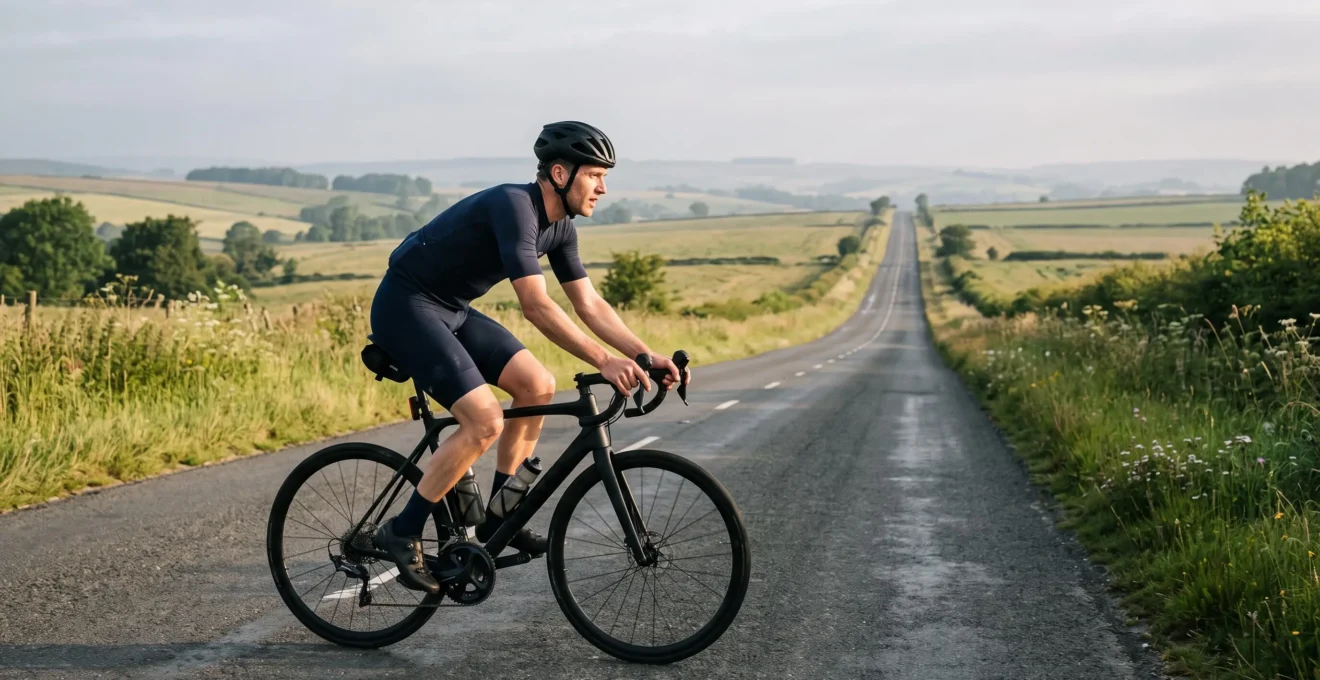
Building enough endurance for a 100 km ride does not require cycling every day. For time-constrained riders, three well-planned weekly sessions can provide a practical framework: one long endurance ride, one focused tempo session, and one shorter ride dedicated to skills or carefully controlled intensity. The right balance depends on current fitness, training history, available time, and the ability to recover between sessions.
The objective is not to accumulate as many kilometres as possible. It is to develop the ability to maintain a sustainable pace, manage fatigue, and keep eating and drinking effectively as the ride progresses. A structured plan also makes it easier to recognize when fatigue is accumulating faster than fitness.
A six-week progression can help riders with an established cycling base extend their longest ride toward 70–80 km, while a separate recovery pattern protects the quality of subsequent sessions. Neither distance nor timeline is universal: a beginner who is not yet comfortable riding for several hours may need a longer preparation period. Consistent pacing, sufficient recovery, and rehearsed fueling matter as much as the mileage itself.
The three essentials for 100 km endurance
- Protect one progressively longer, predominantly comfortable ride each week.
- Concentrate harder work into one quality session and keep the remaining training genuinely manageable.
- Practice fueling early, monitor recovery, and reduce training volume when fatigue begins to compromise performance.
- Why Doesn’t Riding More Always Improve Your Endurance After a Point?
- How to Structure 3 Weekly Rides So Your Long Ride Gets Easier in 6 Weeks?
- Which Should You Choose for Endurance: Tempo Rides or Intervals if You Live Somewhere Hilly?
- The ‘Every Ride Hard’ Habit That Kills Endurance Gains in 4 Weeks
- When Should You Add Your Longest Ride if Your Event Is in 8–10 Weeks?
- How to Plan a 4-Week Mileage Ramp With One Built-In Recovery Week?
- How to Estimate Your Bonk Risk Before a Ride Using 3 Simple Inputs?
- What Does Glycogen Depletion Feel Like and How Do You Stop It Before It Hits?
Why Doesn’t Riding More Always Improve Your Endurance After a Point?
Riding more does not automatically produce better endurance because training creates both a stimulus and a recovery requirement. Additional volume can help when the rider can absorb it, but poorly timed or unnecessarily demanding sessions can increase fatigue without producing a proportional improvement in performance. Three carefully distributed rides may therefore be more useful than four or five sessions that leave the rider continually tired.
Endurance development follows a stress–recovery–adaptation cycle. A sufficiently demanding ride challenges the cardiovascular system, muscles, and energy-management processes. Recovery then allows the body to adapt. If another demanding session arrives before the rider has adequately recovered, accumulated fatigue can interfere with performance and make progress difficult to assess.
This distinction matters when a familiar route begins to feel harder despite apparently consistent training. Possible explanations include inadequate recovery, poor sleep, insufficient fueling, accumulated workload, or an underlying health issue. One difficult ride does not establish a plateau. Look for a pattern across several comparable sessions, considering conditions, effort, heart rate when available, and general well-being.
There is scientific support for managing intensity rather than making every session hard. Stephen Seiler‘s review of endurance-training intensity distribution describes research on how training intensity, duration, and frequency are distributed among endurance athletes. The frequently cited predominance of low-intensity training in competitive athletes should not be treated as a validated formula for recreational cyclists training three times per week.
The practical implication is simple: add training only when the current workload is producing progress and recovery remains adequate. A fourth ride that is neither genuinely easy nor sufficiently purposeful can undermine the three sessions that matter most.
Before increasing weekly volume, establish a repeatable baseline. If performance and energy improve while the schedule remains manageable, maintain the structure. If fatigue persists, reduce unnecessary intensity before assuming that more kilometres are the answer.
How to Structure 3 Weekly Rides So Your Long Ride Gets Easier in 6 Weeks?
A practical three-ride week combines one long endurance ride, one mid-length tempo session, and one shorter, predominantly easy ride for skills or controlled intensity. The long ride develops the ability to remain on the bike for several hours; tempo work builds the capacity to sustain a purposeful effort; and the shorter session maintains consistency without consuming excessive recovery. The proportions should reflect current fitness, not an arbitrary target.
The following example is designed for a rider already comfortable completing approximately 45–50 km. It is an illustrative progression, not a universal prescription. If the opening distance would be a major jump from current training, begin lower, repeat weeks when necessary, or extend the preparation period.
| Week | Long ride | Mid-length ride | Shorter ride | Main priority |
|---|---|---|---|---|
| 1 | 50 km | Steady tempo intervals | Easy riding and skills | Establish a manageable baseline |
| 2 | 55 km | Repeat the tempo structure | Easy riding and skills | Practice consistent pacing |
| 3 | 60 km | Repeat if recovery is good | Easy riding and skills | Extend time in the saddle |
| 4 | 45 km | Shorter tempo session | Easy riding and skills | Reduce volume and recover |
| 5 | 65 km | Controlled tempo session | Easy riding and skills | Resume progression |
| 6 | 75 km | Moderate, controlled quality | Easy riding and skills | Approach the event’s demands |
Keep the two shorter sessions relatively stable while the long ride progresses. The exact distances, duration, and intensity need adjustment to individual ability. If a longer ride produces lingering fatigue, repeat the previous manageable distance instead of forcing the next increase.
To make the schedule fit around work and family, place the long ride on the day with the most available time, often the weekend. Put the quality session after an easier day or rest day, and leave enough recovery between it and the long ride. For example, Tuesday, Thursday, and Sunday can work if the Thursday session remains controlled and Sunday is the priority.
Measure whether the long ride is becoming easier through three checkpoints: higher average speed at a comparable perceived effort, lower heart rate at the same pace when conditions are comparable, and less fatigue the following day. Weather, route, hydration, and accumulated stress can affect these measurements, so compare trends rather than isolated rides.
Your five-step weekly planning checklist
- Choose a long-ride distance appropriate to current ability and record it in the training calendar.
- Schedule the tempo session and define its duration or work intervals before starting.
- Assign the shorter ride an easy skills focus or a limited, planned intensity component.
- Record perceived effort, average speed, and heart rate if available after each comparable ride.
- Review next-day fatigue and decide whether to progress, repeat the week, or reduce the workload.
If one session must be skipped, protect the long ride when it is central to the current training goal and recovery is adequate. Do not squeeze missed sessions into the following days. The purpose of a three-ride structure is to make training sustainable, not to turn a busy week into a recovery deficit.
Which Should You Choose for Endurance: Tempo Rides or Intervals if You Live Somewhere Hilly?
Choose tempo when you want a repeatable, sustained endurance stimulus with relatively manageable recovery demands. Choose intervals when you need a more concentrated high-intensity stimulus and can recover adequately afterward. On hilly roads, climbs can provide natural changes in effort, but they do not automatically need to become hard intervals. The best choice depends on the session’s objective, the terrain, and the importance of preserving energy for the long ride.
Tempo generally means working at a controlled, comfortably hard effort that can be sustained for planned periods. Breathing is deeper than during an easy ride, but the effort should not feel like a maximal test. The precise intensity depends on the rider’s fitness and training method; a power meter or heart-rate monitor can help, but neither is essential for following a simple plan.
Intervals deliberately alternate harder work with recovery. They can deliver a concentrated stimulus in less time, but demanding intervals may create more fatigue and require more recovery. On a three-ride schedule, that cost matters because the long ride is a central preparation session for 100 km.
| Training situation | Practical choice | Execution |
|---|---|---|
| Mostly flat terrain | Steady tempo | Ride sustained blocks at a controlled, repeatable effort. |
| Rolling or hilly terrain | Terrain-led tempo | Allow climbs to raise effort moderately and recover on descents. |
| Good recovery and a specific high-intensity goal | Planned intervals | Use defined work periods and easy recovery periods. |
| Heavy legs or a demanding long ride approaching | Easy endurance | Remove the hard component and protect recovery. |
On hilly routes, use the climb to regulate effort rather than treating every ascent as a competition. Stay seated when practical, maintain a sustainable cadence, and let the effort ease naturally on the descent. A climb that leaves you gasping may be too intense for a session intended to develop steady endurance.
Use a simple conversational check. During an easy endurance ride, you should generally be able to speak in complete sentences. If you cannot recover your conversation on the flats between climbs, or your effort remains elevated throughout the route, the ride has probably become more demanding than planned.
Tempo is often the more repeatable choice when training time is limited, while intervals can be useful when deliberately programmed. Neither is mandatory every week. For riders who are new to structured training, consistent comfortable endurance riding should come before adding demanding intervals.
The ‘Every Ride Hard’ Habit That Kills Endurance Gains in 4 Weeks
Turning every ride into a hard effort can undermine endurance development because it makes recovery less predictable and reduces the quality of the sessions that require sustained energy. Group rides, competitive instincts, and chasing familiar route segments can gradually push an easy session into a medium-hard effort. Repeating that pattern may leave a rider tired without providing a clearly differentiated training stimulus.
The problem is intensity creep. A rider starts a planned endurance ride at a comfortable pace, increases the effort on climbs, accelerates to follow a group, and finishes with a demanding session. The next quality ride then begins with residual fatigue, and the long ride becomes harder to complete at a stable pace.
A useful guardrail is to keep two of the three weekly rides genuinely comfortable and reserve one session for planned quality work. The long ride can be physically demanding because of its duration, but its intensity should remain controlled. The shorter session can focus on handling, cadence, and relaxed consistency rather than becoming another race.
Watch for several signs that the balance is slipping:
- Legs that feel unusually heavy on waking, especially when this persists across several days.
- Higher perceived effort on familiar routes at comparable speeds and conditions.
- A persistent change in resting heart rate relative to personal trends, if measured.
- Declining motivation, disrupted sleep, or repeated difficulty completing planned sessions.
- Long rides that become progressively slower or harder despite similar conditions.
None of these signs alone proves that training intensity is excessive. Heat, illness, work stress, sleep, and fueling can produce similar effects. Consider the pattern and reduce the workload when several warning signs appear together.
If every ride has become hard, use a deliberately easier week. Reduce the volume and remove unplanned intensity, while keeping only comfortable riding that feels appropriate. Once energy and recovery improve, reintroduce one controlled quality session rather than immediately returning to the previous workload.
The four-week timeframe in this section’s title is a practical warning, not a scientifically established deadline for stagnation. Some riders notice problems sooner; others tolerate a workload longer. The important signal is whether the current pattern is sustainable and whether performance is progressing.
When Should You Add Your Longest Ride if Your Event Is in 8–10 Weeks?
For an event scheduled in eight to ten weeks, place the longest preparation ride approximately two to three weeks before event day as a practical planning target, provided the rider has enough training history to complete it safely. This timing leaves room to recover and reduce training volume before the event. It is not a universal rule: beginners and riders recovering slowly may need a shorter peak ride or a longer taper.
The longest ride should be the culmination of progressive training, not an isolated attempt to prove that 100 km is possible. Build toward it using the six-week structure, adjusting the distances to the current baseline. If the six-week progression ends two to three weeks before the event, the peak ride can become the final major rehearsal before reducing overall workload.
Make that rehearsal specific to the event. Where practical, use terrain that resembles the route, wear the equipment planned for event day, and test the clothing, bottles, food, and pacing strategy. If the event includes prolonged climbs, exposed roads, or rolling terrain, include relevant conditions in preparation rather than relying exclusively on distance.
The peak ride does not have to be a maximal effort. A controlled ride near the expected event effort, with sensible pacing and consistent fueling, can provide useful information about comfort, equipment, and energy management. The purpose is to identify problems while there is still time to address them.
For a first-time 100 km rider, attempting a near-full-distance training ride may be inappropriate if the current base is limited. A longer ride at an easier pace, followed by a carefully planned taper and conservative event-day pacing, can be a more reasonable alternative. However, this approach does not guarantee that 100 km will be comfortable or achievable on the day.
A taper means reducing training workload before the event while retaining enough appropriate activity to avoid feeling completely detrained. A 2023 systematic review and meta-analysis of endurance tapering found improvements in time-trial performance and time to exhaustion in the included research. Its findings concern trained endurance athletes and should not be treated as proof that every recreational cyclist needs an identical taper.
After the longest ride, reduce the workload according to accumulated fatigue and training history. The objective is to reach the start line able to use the endurance already developed, rather than to squeeze in one last exhausting session.
Key decisions before the final preparation phase
- Choose the peak ride based on current ability and place it early enough to recover before the event.
- Rehearse pacing, equipment, food, and fluids during the longest manageable session.
- Reduce workload before event day rather than trying to gain additional endurance at the last minute.
How to Plan a 4-Week Mileage Ramp With One Built-In Recovery Week?
A four-week mileage ramp can follow a three-weeks-up, one-week-down pattern. Increase the training load progressively for three weeks, then substantially reduce volume in the fourth week, particularly the distance of the long ride. This structure creates a planned opportunity to recover before the next progression. The exact size of each increase should reflect current mileage, recent fatigue, and how well the rider has handled previous weeks.
For example, a rider might progress the long ride over three weeks, then shorten it in week four. The recovery week should still contain manageable activity if appropriate, but it should not be used to make up missed kilometres or add extra hard sessions. A lower-volume week is a deliberate part of the plan, not lost training time.
There is no single weekly percentage increase that is appropriate for every cyclist. Instead, use a practical feedback loop:
- Increase the workload only when the previous week was completed comfortably enough to recover.
- Check whether ordinary riding effort, sleep, energy, and motivation return to their usual levels.
- Use the recovery week to assess whether accumulated fatigue has decreased.
- Repeat the previous progression step if fatigue remains elevated or the planned rides were too demanding.
Apply the recovery pattern to the long-ride milestones rather than planning the two schedules independently. In the six-week example, week four reduces the long ride after three progressive weeks. Subsequent increases should occur only when recovery supports them. If the peak ride falls near the end of a build period, allow enough time afterward for the pre-event reduction in training load.
Recovery weeks and event tapers serve related but different purposes. A recovery week helps manage fatigue during preparation; a taper is scheduled before the event to improve readiness. Evidence from research on pre-competition tapering should not be interpreted as validating one exact four-week mileage pattern for every recreational cyclist.
The most useful ramp is one that can be repeated without accumulating excessive fatigue. If the rider is not recovering well, the next step is to reduce the workload or repeat a manageable week, not to force the planned distance.
How to Estimate Your Bonk Risk Before a Ride Using 3 Simple Inputs?
A practical pre-ride bonk-risk check considers three inputs: expected ride duration and intensity, how well fueled and rested you are before starting, and how much carbohydrate you plan to consume during the ride. These inputs can highlight avoidable problems, but they do not form a validated medical or physiological risk calculator. Use the assessment to make a sensible fueling decision, not to guarantee that a bonk will or will not occur.
The underlying concern is carbohydrate availability. Working muscles use carbohydrate as one of their main fuels, with demand influenced by exercise intensity and duration. Starting with limited available fuel, riding hard for several hours, and carrying too little food can increase the likelihood of fatigue associated with inadequate carbohydrate availability.
Before a long ride, review the following three inputs:
- Duration and intensity: Estimate how long the ride will take, including hills and stops. A sustained hard ride creates different fueling demands from a shorter, easy outing.
- Pre-ride readiness: Consider recent meals, how recently you ate, sleep, and the previous day’s training load. A demanding ride after poor sleep and limited food deserves more caution.
- On-bike carbohydrate: Check the amount you intend to carry, the expected intake per hour, and whether you can realistically consume it throughout the ride.
| Risk signal | What it suggests | Practical response |
|---|---|---|
| Lower concern | Manageable duration, normal readiness, and a realistic food and drink plan | Follow the planned pace and begin fueling early. |
| Moderate concern | Longer duration, a harder route, a delayed meal, or an uncertain fueling plan | Improve the pre-ride meal, carry additional suitable fuel, and review the hourly plan. |
| Higher concern | Long, demanding ride combined with poor readiness and insufficient planned intake | Address the fueling gap, reduce the planned intensity or duration, or postpone the ride if necessary. |
These categories are practical decision aids, not validated thresholds. A rider may have problems even when the plan appears adequate, and symptoms during exercise can have causes other than carbohydrate depletion. The screening framework should therefore be used alongside experience, sensible pacing, and attention to how the body responds.
30–60 g of carbohydrate per hour
A commonly cited intake range for endurance exercise lasting 1–2.5 hours. Longer events may require higher intakes, depending on intensity, individual tolerance, and the fueling strategy.
The endurance-athlete nutrition and fueling review in Nutrients discusses carbohydrate availability, hydration, and recommendations for prolonged exercise.
For longer rides, the review also describes intakes of 60–70 g per hour, potentially increasing to 90 g per hour when tolerated. These are reference ranges rather than mandatory targets. Riders should consider gastrointestinal tolerance, the type of carbohydrate consumed, the planned effort, and whether they have practiced the strategy during training.
Apply the screening check before the weekly long ride and the peak preparation ride. Those sessions are opportunities to test the amount of food needed, the practical timing of intake, and the ease of carrying supplies. Rehearsing the plan under realistic conditions makes event-day decisions more predictable.
If the plan remains inadequate after adjustments, shortening the ride is a reasonable training decision. A completed, appropriately fueled session is more useful than forcing extra distance while underprepared.
What Does Glycogen Depletion Feel Like and How Do You Stop It Before It Hits?
Glycogen depletion can contribute to a marked decline in cycling performance when carbohydrate availability becomes insufficient for the demands of the ride. Riders may notice that their usual power or pace suddenly feels difficult to maintain, concentration deteriorates, or fatigue becomes unusually intense. Hunger, shakiness, and feeling cold can also occur, but these symptoms are not specific to glycogen depletion and should not be used to diagnose it on their own.
The most useful strategy is prevention. Begin eating before pronounced hunger develops, maintain a steady intake that matches the planned duration and effort, and drink regularly. Do not wait until power has collapsed to start thinking about food: carbohydrate consumed late in a difficult ride cannot instantly restore depleted reserves or erase accumulated fatigue.
During a long ride, watch for a combination of changes rather than one isolated sensation. A growing inability to sustain your normal effort, unusual difficulty concentrating, and a strong sense of fatigue should prompt a reassessment of pace, food, fluid intake, and general condition. Heat, dehydration, illness, and other factors can contribute to similar symptoms.
If the problem develops during a ride, stop somewhere safe, reduce the effort substantially, and take on an appropriate carbohydrate source and fluids if you can tolerate them. Allow time to assess whether symptoms improve. Recovery may be slow and incomplete, so do not assume that eating something means it is safe to resume the original pace or distance.
Persistent, severe, or unusual symptoms require caution. Confusion, fainting, chest pain, severe weakness, or symptoms that do not improve should not simply be attributed to depleted glycogen. Stop exercising and seek appropriate medical assistance when indicated.
Fueling should be practiced during training rather than improvised on event day. Start with a plan suited to the expected ride, adjust it for duration and intensity, and record what works for your stomach and energy levels. The carbohydrate recommendations discussed earlier are useful reference points, but individual needs and tolerance differ.
There is no need to deliberately induce glycogen depletion to learn your limits. Recognizing warning signs during ordinary, safely managed rides and keeping a record of food, effort, and symptoms provides useful information without intentionally creating an avoidable problem.
For the next training session, choose a manageable distance, plan food and fluid intake in advance, and record how your energy changes over time. Combined with progressive long rides, controlled intensity, and a realistic recovery schedule, this approach provides a practical foundation for preparing for 100 km without needing a complicated training programme.
Can you train for a 100 km cycling event with only three rides a week?
Three weekly rides can provide a practical preparation structure for many recreational cyclists, particularly those with an established base. A long endurance ride, a controlled quality session, and a shorter easy or skills-focused ride cover complementary objectives. Whether three sessions are sufficient depends on current fitness, available training time, recovery, and the event’s difficulty. Riders starting from a low base may need more than six weeks.
How far should the longest training ride be before a 100 km event?
A peak ride of approximately 70–80 km is a useful planning example for riders who can already manage the earlier progression comfortably, but it is not a requirement for everyone. Current ability, terrain, total time in the saddle, and recovery capacity should determine the distance. A first-time rider should not force a near-full-distance ride if the current base is insufficient.
Is tempo training better than intervals when preparing for a long ride?
Tempo is often easier to repeat within a three-ride week because it offers a sustained, controlled effort without necessarily creating the recovery demands of hard intervals. Intervals can be useful when there is a specific intensity goal and sufficient recovery time. On hilly terrain, moderate climbs can provide natural changes in effort, but the rider should avoid turning every climb into an all-out effort.
How much carbohydrate should you consume during a long cycling ride?
A commonly cited reference is 30–60 g per hour for endurance exercise lasting 1–2.5 hours. Longer events may call for higher intakes, potentially reaching 90 g per hour when tolerated. The appropriate amount depends on duration, intensity, individual tolerance, and preparation. Practice the strategy during training, carry enough supplies, and avoid waiting for pronounced hunger or fatigue before eating.
Should you keep training when your legs feel heavy and your performance drops?
One difficult ride does not necessarily mean that training should stop, but persistent heavy legs and declining performance warrant a review of workload, sleep, nutrition, and recovery. Reduce intensity or volume when fatigue is accumulating, and repeat a manageable training week if necessary. If symptoms are severe, unusual, or persistent, consider medical advice rather than assuming that training fatigue is the only explanation.